
Central business districts emptied. Airports fell silent. Retail stores shuttered or were hastily repurposed into vaccination centres and testing clinics. Cash, once ubiquitous, vanished almost overnight, replaced by contactless payments and QR codes. Meetings migrated to screens, business suits to the back of wardrobes, and daily commutes to short walks between kitchen tables and spare rooms.
Practices that had endured for decades, even generations, were suspended with barely a fight.
What had seemed essential was revealed to be optional.
The question is not what changed. The question is why it took a pandemic to change it.
We live with what might be called redundant rituals—practices that persist long after their original purpose has faded. The daily commute into a central business district. The assumption that work must be performed in situ to be valid. The expectation of formal attire as a proxy for professionalism. The use of cash in an increasingly digital economy. Fixed retail tenancies designed for predictability in a world that is anything but.
None of these were new points of contention. Each had been questioned, debated, even partially disrupted in the years before COVID. Yet they endured.
Until they didn’t.
Within weeks, the defaults flipped. Offices became optional. Meetings became virtual. Payments became frictionless. Mentoring took place while walking in parks rather than sitting in boardrooms. Childcare assumptions were renegotiated in real time. Retail spaces shifted from sites of consumption—tanning salons, nail parlours, fashion outlets—to sites of function: medical centres, testing clinics, 24-hour chemists.
These were not innovations so much as permissions. The alternatives had always existed. What changed was the removal of resistance.
But the deeper disruption was not behavioural. It was structural.
Borders closed, and with them disappeared an entire class of people: international students, backpackers, tourists. In countries like Australia, this was not simply a loss of visitors. It was the removal of a mobile population that functioned simultaneously as labour force, consumer base, and housing buffer.
Hospitality venues, already fragile, lost their casual workforce almost overnight. Many workers left the sector entirely, finding more stable or predictable employment elsewhere. When restrictions lifted, they did not return in sufficient numbers. Trading hours shrank. Menus simplified. Service expectations adjusted downward.
At the same time, backpacker hostels—long the invisible infrastructure supporting a transient workforce—were sold off or repurposed. What had once been low-cost, high-density accommodation became apartments, boutique developments, or short-term rentals. Capacity was not paused; it was removed.
The “temporary” population, it turned out, had been permanent infrastructure.
These shifts exposed something larger about the way economies function.
Much of what appeared to be lifestyle—tourism, international education, casual work—was in fact structural. The system depended on a continuous flow of people: to work, to spend, to study, to occupy space flexibly and temporarily. When that flow stopped, the effects cascaded across labour markets, housing, retail, and urban life.
And yet, as borders reopened, those flows resumed with remarkable speed. Migration surged. International students returned. The system, having been briefly interrupted, reassembled itself.
Not because it had been proven optimal, but because it had been built that way.
This points to a deeper truth. Redundant rituals do not persist simply because of habit. They persist because they are embedded within systems designed for stability.
Those systems have their own logicand their own inertia.
Consider the daily commute. During the pandemic, it was widely demonstrated that large segments of knowledge work could be performed remotely, often with equal or greater efficiency. By any narrow definition, the ritual of co mmuting appeared redundant.
And yet, governments and institutions were quick to encourage, and in some cases insist upon, a return to the office.
Why?
Because commuting is not just a behaviour. It is a load-bearing mechanism within a much larger system. Transport infrastructure—built at enormous cost—depends on regular usage. Central business districts rely on concentrated foot traffic to sustain retail, hospitality, and commercial property values. Urban planning assumptions, developed over decades, are predicated on density and flow.
To abandon commuting entirely would not simply change how people work. It would destabilise the economic and spatial structures built around that work.
In this sense, what looks redundant at the level of behaviour can be essential at the level of systems.
The same pattern can be seen elsewhere.
Fixed retail tenancies gave way, under pressure, to pop-up stores and short-term leases—more flexible, lower-risk, better suited to uncertain demand. Yet the underlying property model still favours stability and long-term income. Universities, faced with the rapid acceleration of artificial intelligence and changing skill requirements, continue to operate on long curriculum cycles and accreditation processes that assume a slower rate of change.
Town planners design cities for patterns of movement and work that may no longer hold. Educational institutions prepare students for careers that may evolve or disappear within the span of a degree.
These are not failures of imagination. They are consequences of systems designed for continuity operating in an environment that is increasingly discontinuous.
If there is a unifying lesson in all of this, it is one of tempo.
During COVID, behaviour changed in weeks. Cash disappeared. Offices emptied. Entire industries reconfigured. But the systems underpinning those behaviours—transport networks, property markets, migration frameworks, educational institutions—are built over years or decades. They cannot pivot at the same speed.
What followed was not a clean transition to a more efficient model, but a negotiation. Some rituals disappeared because they were, in truth, no longer needed. Others returned because the systems behind them had not, and perhaps could not, change quickly enough. Still others vanished because the capacity supporting them—labour, accommodation, infrastructure—had been permanently altered.
This leaves an open question, and perhaps the most important one.
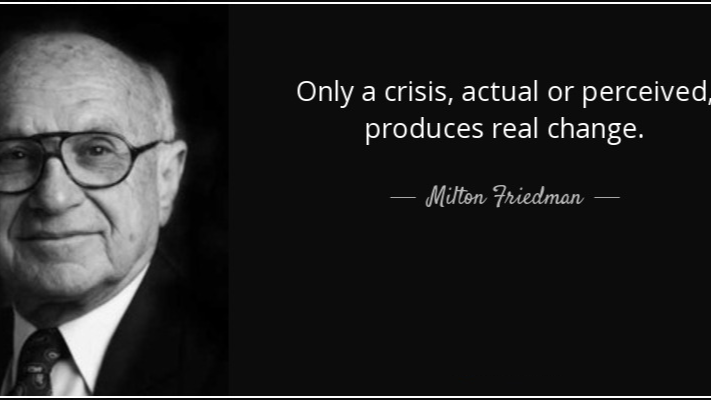
If it takes crisis to expose redundancy, how do we prepare for change without waiting for catastrophe?
How do we educate in a world where knowledge evolves faster than degrees? How do we facilitate mobility—of labour, of people, of ideas—when the infrastructure that supports it can disappear as easily as it did during the pandemic? How do we design cities that are not locked into a single pattern of work and movement? And how do we integrate technological advances we can already foresee, rather than waiting for disruption to make them unavoidable?
These are not questions of innovation so much as design.
They require systems that value resilience alongside efficiency, that incorporate flexibility rather than resist it, and that can adapt incrementally rather than only under duress.
The pandemic demonstrated something remarkable: we are capable of rapid, large-scale change. Entire economies can pivot in a matter of weeks when circumstances demand it.
What it also demonstrated is that we rarely choose to.
Redundant rituals are easy to identify in hindsight. Much harder is the task of dismantling them in advance—particularly when they are embedded within systems that depend on their persistence.
Which raises a final, uncomfortable possibility.
We do not change because we cannot.
We change because we must.