Depression, Darkness and the Nature of Light

I read an excerpt from the Roland Garros women’s final about Maja Chwalińska. It ended, “… in the midst of darkness, light persists.” It was in reference to her suffering depression.

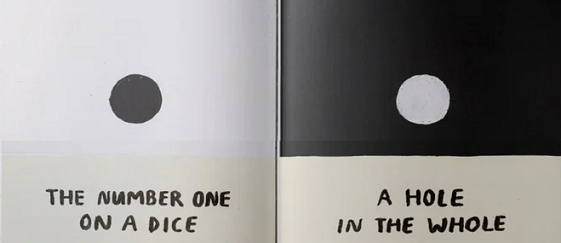
It prompted me to ponder – are light and dark polar opposites, or is there something more to it?

There are at least three ways to answer that question.

The everyday answer is yes. Light and dark are opposites. We navigate the world this way. Day and night. Visible and invisible. On and off. In practical terms, the distinction works.

The scientific answer is a little different. Darkness is not really a “thing” in the same way light is. Light is electromagnetic radiation. Darkness is what we call the absence of detectable light. In physics, darkness is not an opposing force pushing against light. It is a condition.

The philosophical or metaphysical answer is that light and darkness may not be the deepest distinction at all.

If darkness is understood as the unmanifest, the void, the field of potential, then light is not its opposite. Light is an expression arising from it. Just as a wave is not the opposite of the ocean, manifestation is not the opposite of potential.

This is why many traditions begin in darkness:

  • In the opening of Genesis, darkness is upon the face of the deep before light appears.
  • In Taoist thought, the nameless precedes the named.
  • In many cosmologies, creation emerges from a primordial void or chaos.
  • In these framings, darkness is not competing with light. It is prior to light.

The interesting question then becomes:

If light requires darkness to be perceived, but darkness does not require light to exist conceptually, are they truly opposites?

A candle needs darkness to reveal itself. A star needs the night sky. Contrast makes light visible.

Perhaps what we call “light and dark” are polar opposites within the manifested world, while both arise from a deeper ground that is neither light nor dark.

Not light versus darkness, but a deeper source from which both emerge. the conversation begins to shift from polarity to origin.

The Problem With Burnout

The problem with burnout is that most practitioners, from a variety of disciplines, treat it as a condition to be managed rather than a problem to be solved.

Support groups, therapists, coaches, counsellors, wellbeing practitioners and medical professionals all have an important role to play. Many provide relief, support, healing and recovery. Yet beneath these well-intentioned interventions sits an assumption that is rarely challenged. The assumption is that burnout itself is the problem.

But what if burnout is not the problem?

What if burnout is a symptom?

In my eyes, burnout is part of a chain.

Stress. Tiredness. Fatigue. Burnout. Breakdown.

Each stage points to something deeper. Each stage is a warning signal. Each stage is attempting to tell us something about how we are living, working and operating in the world.

The question then becomes: what is burnout a symptom of?

For career professionals, I believe burnout has two primary contributors. The first is how we operate. The second is the environment in which we operate. One is personal. The other is systemic.

Much of the discussion surrounding burnout focuses on the individual. We are encouraged to meditate, exercise, sleep better, establish boundaries, practice self-care and build resilience. Whilst these are worthwhile pursuits, they largely focus on helping people cope with their circumstances.

And coping is not the same thing as solving.

Without a thorough examination of the factors that create, compound and perpetuate burnout, we risk becoming trapped in an endless cycle of management strategies. We learn to function with the condition rather than investigate its origins.

When I refer to systemic factors, I mean the workplace itself. The job. The culture. The leadership. The expectations. The workload. The structure. The assumptions embedded within the organisation. These factors are often hiding in plain sight, yet they receive far less attention than the individual experiencing the symptoms.

Our business vernacular does not help. We celebrate resilience. We admire endurance. We reward those who push through. We wear busyness as a badge of honour. It is a very stoic frame of reference. A very masculine frame of reference.

Yet resilience, whilst valuable, is fundamentally a coping strategy.

It does not necessarily address the source of the pressure.

A more useful inquiry may be this: what conditions exist that require so much resilience in the first place?

From a practical perspective, anyone experiencing burnout would be well served by examining both themselves and their environment. How am I operating? What demands am I placing upon myself? What demands is this environment placing upon me? Which factors are within my control and which are not?

And then there is an option that few people seem willing to discuss.

Leave.

Not as a first response. Not as a universal solution. Not as an act of defeat.

But as an option.

There is a coaching principle often used in conflict situations that begins with a simple instruction: get to a safe place.

Burnout may warrant the same consideration.

Having options is healthy. Knowing there are alternatives changes the conversation. The moment a person recognises they have agency, they cease being entirely at the mercy of their circumstances.

For those responsible for leading organisations, perhaps the question is even more important.

If burnout has become endemic, if fatigue is commonplace, if stress is normalised, perhaps the challenge is not how to improve coping strategies.

Perhaps the challenge is to create environments where people are not so dependent upon them.

Because whilst burnout may be experienced by an individual, the conditions that produce it are often much larger than the individual themselves.

If the shoe fits, wear it

This is less a footwear story and more a business model story.

For decades, footwear companies have operated on a simple premise: manufacture standard shoes in standard sizes and sell more units. The customer adapts to the product. If a child’s feet grow, the solution is simply to buy the next size up.

But what if the starting point was different?

Children’s feet are constantly changing. They grow at different rates, develop different shapes, and are subjected to different activities. Yet the industry largely treats them as a sizing exercise. A measurement is taken, a size assigned, and the child is fitted into a predefined range.

Advances in 3D scanning, digital modelling and additive manufacturing suggest an alternative future. At the beginning of each school year, a child’s feet are scanned. Not merely length, but width, arch profile, gait and pressure distribution are captured. From this digital model emerges a personalised footwear portfolio: school shoes, sports shoes and recreational shoes, all built around the individual foot rather than an industry average.

The real innovation is not the shoe. The innovation is the relationship.

Instead of selling footwear, the company becomes a manager of foot health and development. The annual scan becomes analogous to a dental check-up or eye examination. As the child grows, the digital model evolves. New footwear is produced based on the latest scan, perhaps using 3D-printed soles and modular upper designs. The relationship continues year after year.

This is mass customisation in its purest form. The efficiencies of industrial production remain, but the output becomes individualised. The economics shift from inventory and standard sizes toward digital design and on-demand manufacturing.

The implications extend beyond footwear. The industrial age was built on standardisation because standardisation was the cheapest way to achieve scale. Emerging technologies are reducing the cost of variation. As a result, businesses can increasingly design around the individual rather than the average.

A custom school shoe may seem unremarkable. Yet it reflects a profound shift in thinking. The question is no longer, “Which shoe fits this child?” The question becomes, “How do we design the right footwear for this child, at this stage of development?”

In that sense, the future footwear company may look less like a manufacturer and more like a trusted adviser. Its value will not lie in producing shoes. Its value will lie in understanding feet. The shoe simply becomes the physical expression of that understanding.

Reapplying For Your Job: The Great Organisational Urban Myth?

Why are spills of positions done?

That’s the inquiry.

Most explanations begin with the official narrative. New strategy. Restructure. Operating model redesign. Merger integration. Digital transformation. Capability uplift. All perfectly reasonable explanations. But are they the real reasons, or simply the most acceptable reasons?

Perhaps a spill is a politically cleaner way to reduce headcount. Rather than targeting individuals, everyone is required to compete for a newly constituted role. The process appears objective, even when the outcome may have been broadly anticipated.

Perhaps it is about capability. Organisations evolve. New skills are required. Different leaders are needed. The future may demand something different from the past. A spill becomes the mechanism through which that transition occurs.

Or perhaps it is about power. New executives often inherit teams they did not build. Existing alliances, loyalties and informal power structures can be difficult to dismantle. A spill effectively resets the board and allows a new leadership team to shape the organisation in its own image.

This may explain why management consultants so often appear during restructures. Not necessarily because they designed the outcome, but because they provide legitimacy. “Following an independent review” sounds more objective than “management has decided.” Consultants provide a process, a framework and, sometimes, political cover.

Then there is another possibility. Do spills reset employee entitlement?

Many long-serving employees develop a perfectly understandable sense of attachment to their role. They built the team. Hired the staff. Delivered the strategy. Solved the problems. Over time the role becomes more than a position on an organisational chart. It becomes part of their professional identity.

A spill challenges that assumption. It reminds everyone that organisations typically view roles as assets that serve a strategy. When the strategy changes, the role can change. The employee sees continuity. The organisation sees discontinuity.

And then there is the uncomfortable question nobody likes to ask. Is a spill simply a way of getting rid of dead wood?

Sometimes perhaps. But that explanation feels too simple. The same process can remove poor performers, high performers, expensive performers and political opponents alike. Clearly something larger is occurring.

Which brings us back to the original inquiry.

What organisational problem is a spill actually attempting to solve?

Strategy? Cost? Capability? Power? Politics? Control?

Or all of the above?

Perhaps restructures tell us less about jobs than they do about how organisations manage change.

Are cost overruns inept budgeting or a political play to get the project underway?

Every few months another major infrastructure project appears in the headlines having exceeded its budget by hundreds of millions, sometimes billions, of dollars. The reaction is usually predictable. Politicians blame inflation, supply chains, labour shortages or unforeseen complexity.

Critics point to incompetence, poor governance and failed planning. The assumption underpinning both arguments is that the original budget was intended to be an accurate estimate of the final cost. But was it?

That question interests me because it shifts the inquiry away from project management and towards incentives. We assume the purpose of a budget is to forecast reality. Yet in large public projects the first challenge is often not delivery. It is approval. Before a tunnel can be built, a railway extended or a hospital expanded, someone must convince government, Treasury and ultimately the public that the project is worthwhile. Which raises a provocative possibility.

What if the budget is not merely a forecast? What if it is also a sales document?

Imagine a project that genuinely costs $20 billion. If that figure is presented upfront, does the project proceed? Perhaps. But perhaps not. There are competing priorities, fiscal constraints and political realities. A lower figure, however, may make the project appear affordable, achievable and worthy of support. Once approved, the project develops a momentum of its own. Contracts are signed. Construction begins. Jobs are created. Communities adjust their expectations. Political capital is invested.

Years later, when the cost inevitably rises, the conversation is no longer whether the project should commence. It is whether it should be abandoned. At that point billions may already have been spent. The sunk cost effect takes hold. Nobody wants to explain why a half-finished tunnel should remain half-finished. Nobody wants to defend a cancelled railway line after years of disruption. Continuing becomes easier than stopping. Which makes me wonder whether some cost overruns are less about forecasting failure and more about the realities of getting major projects approved in the first place.

Of course, that is not to suggest every cost overrun is deliberate or that corruption, industrial relations, governance failures, scope creep, inflation and labour shortages do not exist. They clearly do. In Victoria, for example, recent scrutiny of construction industry practices and allegations surrounding the CFMEU have added another dimension to the discussion. But even if corruption is a factor in some projects, it does not fully answer the broader question.

Why do large projects across different governments, jurisdictions and decades so often exceed their original budgets?

The common thread may not be the individuals involved. It may be the system itself. Optimism is rewarded. Ambition is rewarded. Big visions are rewarded. The person arguing for caution, contingencies and worst-case scenarios is often competing against someone promising transformation, growth and prosperity. Under those conditions, should we be surprised when estimates lean towards optimism?

Perhaps the most interesting question is how we define success.

A tunnel that costs twice its original budget may still transform a city for the next fifty years. A railway line may exceed every forecast and still generate enormous economic and social value. Conversely, a project delivered precisely on budget may fail to produce any meaningful benefit at all. Yet public debate tends to focus overwhelmingly on the variance between forecast and actual cost. We treat the budget as the scoreboard. Maybe it isn’t. Maybe it is merely one measure among many.

Which brings me back to the original question.

When a major project exceeds its budget by billions of dollars, are we witnessing inept budgeting? Or are we witnessing a political process in which projects must first become acceptable before they can become reality? Because if the latter is even partly true, then the cost overrun may not be the story. It may simply be the consequence of a much earlier decision about what was required to get the project underway.

From Boardroom Battles to Battlefield Memes

Not long ago I wrote about the military metaphors that dominate business.

We launch products. We target customers. We defend market share. We attack competitors. We build war rooms. We execute campaigns. We win battles and celebrate victories.

The language of commerce has been shaped by the language of conflict for decades. Even our organisational structures reflect military thinking—chains of command, strategy, intelligence, logistics, operations and command-and-control leadership. For generations, business has looked to the battlefield for its vocabulary.

Recently, however, I’ve noticed something intriguing.

The flow of influence has reversed.

War is beginning to borrow the language of business.

Or perhaps more accurately, war is borrowing the language of modern communication.

The caricatures of Putin. The memes of Trump. AI-generated images shared millions of times across social media. They aren’t simply political humour. They represent an evolution in how influence is exercised during conflict.

Article content

During the Second World War, propaganda was largely controlled by governments. Posters urged citizens to enlist. Radio broadcasts rallied the nation. Newsreels reinforced a carefully curated narrative. Information flowed in one direction—from governments to citizens.

The objective was straightforward: maintain morale, strengthen national identity and influence public opinion.

Television changed the medium but not the model. Governments still largely controlled the narrative. Public relations emerged from this era, becoming increasingly sophisticated in managing reputation, shaping perception and influencing behaviour. Many of the techniques that underpin modern public relations have their roots in wartime communications.

Then came the internet.

Then social media.

Then AI.

For the first time in history, governments no longer hold a monopoly over influence. Every individual with a smartphone can become a publisher. Every organisation can become a media company. Every citizen can become a propagandist—knowingly or otherwise.

That changes everything.

The most powerful messages today are often not carefully crafted speeches or official press conferences. They’re images. Symbols. Satire. Thirty-second videos. AI-generated artwork. Memes that travel across the globe in minutes.

A single image can communicate more emotionally than a thousand-word article. Before we’ve consciously analysed what we’re seeing, we’ve often formed an opinion. Images bypass our analytical mind and connect directly with emotion.

That is precisely why they are so powerful.

The battlefield itself has expanded.

Wars are still fought with soldiers, tanks, missiles and drones. But they are also fought through algorithms, hashtags, influencers and viral content. Public opinion has become another theatre of war.

Influence has become a strategic asset.

For business leaders, this should not be dismissed as merely an observation about international conflict.

The same forces are reshaping corporate communication.

Organisations increasingly compete not simply on products or services, but on narratives. Brand perception can rise or fall overnight because of a viral video. A CEO’s reputation can be enhanced—or destroyed—by a single image that spreads faster than any official statement can respond.

Marketing departments understand this.

Public relations professionals understand this.

Increasingly, boards of directors need to understand it too.

Corporate reputation is no longer managed exclusively through annual reports, media releases and carefully scripted interviews. It lives in an ecosystem where anyone can create content, challenge a narrative or redefine a brand in real time.

The barriers to influence have collapsed.

This has profound implications for leadership.

For much of the twentieth century, communication was about broadcasting a message. Leaders spoke. Employees listened. Organisations published. Customers consumed.

Today’s communication environment is fundamentally different.

It is conversational.

Participatory.

Visual.

Instantaneous.

Narrative no longer belongs to the organisation. It belongs to everyone participating in the conversation.

That requires a different kind of leadership.

It requires leaders who understand that communication is no longer simply about delivering information. It is about shaping meaning. Listening becomes as important as speaking. Context becomes as important as content. Symbols often carry more weight than statistics.

This is one of the defining shifts of our time.

Ironically, while business spent decades borrowing the language of war, modern warfare is increasingly borrowing the communication techniques perfected by marketers, advertisers, content creators and social media platforms.

The disciplines are converging.

The tools of persuasion once associated with Madison Avenue are now evident on the geopolitical stage. Likewise, the speed, symbolism and emotional impact once associated with wartime propaganda are now commonplace in corporate branding.

The boundaries are dissolving.

Communication has evolved beyond words alone.

It now encompasses images, animation, video, AI-generated content, emojis, icons and memes. The medium has become as influential as the message itself.

Marshall McLuhan’s famous observation that “the medium is the message” feels more relevant today than ever before.

As artificial intelligence accelerates this transformation, the next phase is already emerging. Communication will become increasingly personalised. Messages will adapt to individuals rather than audiences. Influence will become less about broadcasting and more about resonance.

That raises an important question for leaders.

If communication has changed…

If public relations has changed…

If marketing has changed…

If even wartime propaganda has changed…

Has leadership changed as well?

I believe it has.

And those who continue communicating as though it were still the age of newspapers and press releases may find themselves fighting yesterday’s battle while tomorrow’s leaders are already shaping the narrative.

Why Feminine Leadership Traits Are Rising in a Masculine World

Modern leadership frameworks increasingly promote emotional intelligence, collaboration, empathy, adaptability and psychological safety. Executive coaches speak of vulnerability. Organisations champion agile leadership. HR departments encourage authenticity, listening and inclusion.

Yet beneath the language, most workplaces remain structurally unchanged.

Hierarchy still dominates. Targets still govern behaviour. Compliance still overrides intuition. Approval chains still slow responsiveness. Performance is still measured through outputs, KPIs and productivity metrics. Most organisations continue to operate through industrial-age systems built on structure, control and predictability.

Leadership language has evolved faster than organisational architecture.

This contradiction raises an important question: why have feminine leadership traits become so popular in the first place?

The answer may be simpler than we think.

Modern environments have become too complex, interconnected and fast-moving for rigid leadership models alone. Industrial systems were designed for a different era — an era of repetition, predictability and standardisation. In those environments, command-and-control structures worked reasonably well. Stability was prized. Consistency mattered. Uniformity created efficiency.

But living systems do not behave like machines.

Today’s organisations operate inside environments shaped by rapid technological change, distributed workforces, information overload, shifting social expectations and constant uncertainty. Complexity has increased. Interdependence has increased. The pace of change has increased.

And so the traits rising in prominence are not random.

Adaptability becomes valuable when conditions constantly shift. Empathy becomes valuable when managing diverse teams and relational dynamics. Collaboration becomes valuable when knowledge is distributed rather than centralised. Emotional intelligence becomes valuable when human complexity can no longer be ignored.

These are not fashionable ideas. They are systemic responses.

Masculine and feminine, in this context, are energetic tendencies rather than identities. Every person, organisation and environment contains both. Masculine systems tend toward structure, hierarchy, certainty, measurement and control. Feminine systems tend toward flow, responsiveness, integration, collaboration and emergence.

Neither is inherently good or bad. The issue is excess.

When one polarity dominates for too long, imbalance emerges and corrective forces naturally appear. The increasing popularity of feminine leadership traits may therefore reflect a broader attempt to restore equilibrium inside systems that have become excessively rigid.

Which brings us to resilience.

At precisely the moment organisations celebrate empathy, collaboration and adaptability, they also continue glorifying resilience.

This is where the contradiction becomes impossible to ignore.

Resilience is often framed as a modern virtue. We praise people for enduring pressure. For pushing through adversity. For staying strong under relentless demand. The resilient employee absorbs pressure and continues functioning despite strain.

But resilience is not adaptability.

In many ways, it is the opposite.

Adaptability changes with conditions. Fluidity responds to changing environments. Empathy listens and adjusts. Collaboration evolves dynamically through interaction. Feminine leadership traits move with life.

Resilience, by contrast, often means enduring environments that refuse to change.

It is surviving rigidity.

It is tolerating inflexibility.

It is remaining functional inside structures that no longer naturally support human complexity.

The more outdated and rigid the system becomes, the more resilience it requires from the individual.

This is why resilience has become such a celebrated corporate virtue. Not necessarily because organisations are evolving, but because many are struggling to maintain old paradigms inside fundamentally new conditions.

Rather than redesigning systems to become more adaptive, responsive and integrated, organisations often ask individuals to compensate for structural imbalance. The burden shifts to the person.

Be more resilient.

Handle ambiguity better.

Manage your stress.

Push through.

Stay strong.

In this sense, resilience becomes the mechanism that preserves outdated systems. It allows institutions to continue operating without fundamentally confronting the limitations of their own design.

And this may explain why so many modern workplaces feel internally conflicted.

We simultaneously ask leaders to be collaborative while rewarding competitive behaviour. We encourage empathy while maintaining fear-based performance structures. We promote agility while preserving rigid approval hierarchies. We speak of wellbeing while glorifying overwork and endurance.

One paradigm seeks adaptation.

The other seeks survival.

The growing popularity of feminine leadership traits may therefore represent something larger than a management trend. It may signal a deeper systemic correction — a movement away from excessive rigidity and toward greater responsiveness, integration and relational intelligence.

Not because softness is fashionable.

But because old models increasingly struggle to function inside living, interconnected systems.

The future may belong less to those who can endure the old world, and more to those capable of adapting to the new one.

From Angles & Edges to Curves & Spirals: The Rise of the Feminine in Shapes

Geometry is not neutral. The shapes we build with, the angles we favour, and the symbols we use all carry energetic codes. They reflect how we organise the world — what we value, what we control, and how we create order. For millennia, human structures were dominated by straight lines, sharp corners, and rigid geometry — the architecture of masculine order.

But as with colour and sound, culture is shifting.

We are moving away from hard-edged certainty and into curves, arcs, and spirals — the rise of the feminine in shapes. This is not a sudden change, but a gradual rebalancing that is becoming more visible across the environments we build and the systems we design.

Masculine energy thrives on clarity, structure, and control. In form, this has long meant squares and rectangles that create boundaries and containment, alongside triangles and pyramids that reinforce hierarchy and direction. Right angles communicate certainty and precision, while straight lines suggest forward progression and control. These shapes have shaped not only our buildings, but also our systems of organisation and power.

They dominate institutions — office towers, flags, spreadsheets, and military insignia — where stability and predictability are essential. There is comfort in this geometry. It reduces ambiguity, creates clear edges, and defines roles and limits. But over time, these same qualities can become constraints, locking systems into rigidity and limiting their ability to adapt.

As a reaction to this rigidity, we have seen the rise of inverted and fragmented forms. Upside-down triangles subvert hierarchy, while asymmetry breaks away from predictable geometry. Fractals and glitch-inspired designs introduce jagged disruption, and postmodern architecture bends or distorts traditional structures. These expressions challenge order, questioning the dominance of rigid systems and introducing unpredictability.

Yet these forms are still defined by the systems they resist. They disrupt structure, but remain tied to it, reacting rather than transforming. The rules are bent or broken, but not fully transcended. In many ways, this phase reflects a cultural moment of tension — a push against control without yet establishing a new, coherent form.

In contrast, feminine energy dissolves rigidity and invites flow.

Circles represent unity and wholeness, with no beginning or end, while curves and arcs introduce softness, motion, and inclusion. Spirals suggest expansion and continuous evolution, and organic shapes draw from nature — waves, petals, clouds, and natural terrain. These forms are less about defining edges and more about creating connection.

Here, symmetry is not imposed but emerges through flow, as seen in patterns like mandalas or natural growth systems. Balance is achieved through integration rather than control. Where masculine shapes divide and define, feminine shapes integrate and connect, allowing systems to move rather than remain fixed.

This shift is increasingly visible in the physical world. In architecture, rigid structures are being softened with curves, natural light, and forms that respond to their environment.

Advances in materials and technology now allow buildings to move beyond box-like constraints into fluid, wave-like designs. Structures are becoming more responsive to climate, landscape, and human experience, reflecting a deeper awareness of the relationship between built environments and natural systems.

Where once the ambition was to reach upward — towering, linear, and dominant — there is now a growing emphasis on balance and integration. Buildings are designed not just to stand apart from nature, but to exist within it, incorporating greenery, airflow, and organic form. The visual language is shifting from imposition to coexistence.

This pattern extends far beyond architecture. In media, fixed systems such as the 6 o’clock news are giving way to real-time, on-demand content that adapts to the moment. In communication, long-form, text-heavy formats are being complemented — and often replaced — by short, visual, and animated forms that move quickly and fluidly across platforms. Even the way we design space is changing, with fewer barriers and more openness, allowing light, movement, and interaction to flow more freely.

Across all of these domains, the direction is consistent. Systems are moving from static to dynamic, from fixed to fluid, from controlled to responsive. Rather than resisting change, they are being designed to move with it.

Leadership reflects this evolution in form. Masculine-coded leadership builds pyramids of hierarchy, drawing sharp boundaries between roles, authority, and decision-making. These structures provide clarity and control, but can also create distance and rigidity within organisations. Disruptive models may invert or fragment these systems, challenging traditional power dynamics but often remaining defined by them.

Feminine-coded leadership, by contrast, creates circles of inclusion and spirals of growth. Power is distributed rather than centralised, and systems are designed to adapt as conditions change. Decision-making becomes more collaborative, and authority flows rather than sits in fixed positions.

The emphasis shifts from maintaining structure to enabling movement within it.

The geometry of leadership is changing — from ladders and pyramids toward networks, ecosystems, and flows. Organisations are no longer static hierarchies, but evolving systems that require responsiveness, connection, and adaptability to remain effective.

The rise of the feminine in shape is not about erasing the masculine architecture of lines and angles, but about restoring balance. Structure remains essential, providing the stability that allows systems to function. But on its own, it is no longer enough. Curves soften rigidity, spirals introduce evolution, and organic forms reconnect us to living systems.

Where sharp angles divide, curves connect. Where hierarchy imposes, flow adapts. Where rigid systems hold, dynamic systems evolve.

The future will not be defined by sharper edges or greater control, but by the ability to respond, adapt, and integrate. It is not purely structured, nor purely fluid, but a balance of both — systems that can hold form while remaining open to change.

The shapes we choose are not just aesthetic decisions. They are signals of how we think, how we lead, and how we build the world around us.

The Lessons I Learned from Stiffler’s Mum

Have you ever wondered why we have a fascination for living or even holidaying by the coast? Aside from the ocean views and the salt air, what is the emotional attraction that beckons us? Is it an emotional escape from our urban lives?

There’s likely something much deeper going on than “nice views” and fresh air. The coast represents a radically different energetic and psychological environment to the urban landscape. Cities are structured, compressed, scheduled, measured, noisy, transactional and relentlessly productive. They are environments of edges, boundaries, grids, clocks, deadlines and hierarchy. The coastline, by contrast, is fluid, horizon-based, rhythmic, expansive and cyclical. One feels engineered; the other feels primordial.

The emotional attraction may partly be an unconscious yearning for dissolution of structure.

When people stand at the ocean, they often report feeling calmer, smaller, freer, more reflective, even timeless. The horizon removes visual confinement. The repetition of waves entrains the nervous system into slower rhythms. Tides replace schedules. The sea has no obvious borders, no walls, no cubicles, no “to do” list. In that sense, the coast becomes both literal and symbolic escape from the psychological architecture of urban life.

There’s also something archetypal about water itself.

Humans emerged from water. Wombs are fluid environments. Many mythologies associate oceans with birth, mystery, potential, death and rebirth. The ocean can feel simultaneously comforting and terrifying because it represents the unknown – vastness beyond control. That may explain why people don’t simply admire the sea intellectually; they feel drawn to it emotionally. It beckons.

Interestingly, people often say they want to “get away,” but what they may actually be seeking is not distance from work but distance from identity. Urban environments reinforce roles: executive, commuter, consumer, manager, performer. Coastal environments soften those identities. Shoes come off. Time stretches. Status symbols diminish. People walk slower. Conversations become less transactional. The body and nervous system begin orienting differently.

So yes, it may indeed be an emotional escape from urban life, but perhaps even more fundamentally, it is an escape from artificial rhythms back toward natural rhythms. Not necessarily escapism in a negative sense, but a temporary remembrance that another mode of being exists beneath the constructed one.

I contend that starting your own enterprise has the same allure. The entrepreneurial spirit is “the spark of life, “the seed of creation”. It’s just in a commercial form.

Entrepreneurship not merely as commerce, ambition or financial pursuit, but as an expression of an underlying creative impulse. The same impulse that draws people toward oceans, gardens, art, storytelling, children, invention, music, architecture and exploration. The desire to bring something into being.

That’s why many people describe starting a business in strangely organic or existential language:

  • “I’ve always wanted to build something.”
  • “I needed to create my own thing.”
  • “I wanted freedom.”
  • “It felt alive.”
  • “I had an idea that wouldn’t leave me alone.”

Those are not merely economic statements. They are almost reproductive or creative statements.

A corporation in its industrial form often suppresses that impulse through structure, hierarchy, risk controls, process and compliance. Necessary perhaps at scale but still suppressive of raw creative emergence. Entrepreneurship, especially at the artisanal or microbusiness level, reintroduces the individual to the experience of genesis – an idea emerging from nothingness into manifestation.

Which is remarkably similar to the symbolism of the ocean, the womb, the void, or the field of infinite potential.

The entrepreneur steps into uncertainty the same way a person steps into the sea:

  • no guarantees
  • no fixed ground
  • possibility and danger intertwined
  • exhilaration and terror together
  • creation emerging from the unknown

And perhaps that’s why so many people feel emotionally drawn toward entrepreneurship even when it is financially irrational. They are not only seeking income. They are seeking participation in creation itself.

In that sense, enterprise can become a modern expression of an ancient creative instinct – the urge not simply to survive within systems, but to generate new worlds from within oneself.

In my work I’ve had many dealings with exits, defaults, liquidations and bankruptcies. All of which involved some degree of grief. Please indulge me if I go a little spiritual here but closing an enterprise of your own creation is like burying your child or a loved pet.

Many entrepreneurs privately experience it that way, even if the commercial world lacks the language or permission to acknowledge it.

From the outside, society tends to frame business closure in sterile economic terms:

  • insolvency
  • liquidation
  • restructuring
  • default
  • cessation of trade

But for the founder, especially one deeply identified with the enterprise, the experience is often profoundly emotional, existential and grief-laden. Because the business was never merely “a business.” It carried:

  • identity
  • hope
  • sacrifice
  • imagination
  • meaning
  • relationships

In many cases, the enterprise becomes a living extension of the self. Not metaphorically alone, but psychologically and energetically. Founders speak of “giving birth” to businesses, “nurturing” them, “growing” them, “keeping them alive,” “feeding” them with capital, protecting them during vulnerability, watching them mature. The language itself reveals the underlying attachment.

So when the enterprise dies, the grief is often disenfranchised grief – real grief that society does not fully legitimise. People may receive sympathy after the death of a person or pet, but after a business collapse they are more likely to receive analysis, judgement, silence, legal notices or advice about “moving on.”

Yet internally, many founders experience:

  • shame
  • mourning
  • identity collapse
  • emptiness
  • exhaustion
  • disorientation
  • even a kind of spiritual death

Particularly because entrepreneurship is often an act of creation emerging from deep personal longing or vision. When that creation collapses, it can feel like the collapse of possibility itself.

And perhaps this is one of the hidden absences in modern commercial culture: we celebrate the birth of enterprises, but we have almost no rituals for their death.

No funeral. No mourning period. No communal witnessing. No acknowledgement that something once alive in the psyche has ended.

Which is interesting given how central death/rebirth cycles are everywhere else in nature. Forests, seasons, tides, agriculture, mythology – all recognise dissolution as part of renewal. But modern commerce often treats death as failure rather than transition.

That may be one reason so many people become psychologically stranded after business collapse: the system has process for administration, but very little process for grief.

I watched White Lotus. Holidaying near the ocean can be traumatic … as Stiffler’s mum found out.

The New Economy Is Artisanal

There was a time when people were known by what they crafted. Not in the modern branding sense, but in a deeply local and personal way. Bill the butcher. Brian the blacksmith. Allan the accountant. The person and the profession were intertwined because the work itself carried traces of the individual. A blacksmith’s work was not simply functional output. It carried touch, rhythm, judgement and feel.

The craftsperson left something of themselves within the work. Reputation spread not through advertising campaigns or institutional prestige, but through lived experience, word of mouth and direct relationship.

The artisan did not work for a brand. The artisan was the brand.

Industrialisation changed that relationship profoundly. As production scaled, work became fragmented into repeatable functions that could be standardised, measured and replicated. The local workshop gave way to the factory and eventually the corporation. Identity slowly migrated upward into institutions. Increasingly, people derived meaning not from the uniqueness of their contribution, but from the organisations they belonged to. The logo grew larger while the individual became interchangeable.

Even professionalism itself became homogenised through uniforms, business cards, standardised communication, office etiquette and corporate language. Humans adapted themselves to systems designed around efficiency, consistency and productivity.

What is interesting, however, is that industrialisation did not merely mechanise physical labour. It industrialised intellect itself. Much of modern white-collar work consists of repetitive informational processing: emails, administration, compliance, workflow management, reporting, data entry, meeting culture and procedural communication.

In many ways, the office became a cognitive factory. The worker no longer shaped material through embodied participation, but processed abstractions through systems. And while industrial society undoubtedly produced extraordinary abundance, it also flattened many of the sensory and experiential dimensions of life. The system optimised for scale, speed and standardisation, often at the expense of flavour, texture, locality and identity.

The tomato is a surprisingly useful metaphor for this.

Once upon a time there were hundreds of tomato varieties shaped by local climates, local soils, local tastes and seasonal rhythms. Industrial agriculture gradually reduced that diversity to a handful of commercially efficient varieties selected for transportability, shelf life and visual consistency. The result was abundance in quantity but contraction in experience.

The modern supermarket tomato is often perfectly formed yet strangely tasteless. Something similar appears to have happened culturally. Industrial systems created mass production, mass communication, mass branding and mass identity. They delivered scale but often at the cost of richness and distinction.

And yet beneath that industrial surface, another impulse appears to have remained alive. What I find fascinating is that many contemporary cultural trends seem less like fashionable lifestyle choices and more like pressure release valves for something deeply human that has been suppressed for generations.

People increasingly gravitate toward slow food, gardening, farmers markets, handmade pasta, live music, artisan bread, craft beer, boutique accommodation and local experiences.

Many of these activities were once considered ordinary, even mundane. Some were dismissed as unproductive domestic labour. Now they return as aspiration. Not because they are efficient, but because they feel alive.

Even language itself seems to be changing in response to this shift. In sport, commentators increasingly speak about a player’s craft rather than merely their skill. The distinction matters. Skill sounds technical and mechanical. Craft suggests intuition, rhythm, timing, touch and feel. It implies embodied intelligence rather than programmed execution. A player with craft senses space and flow. They improvise. They shape moments rather than merely perform instructions. This is kinaesthetic language. It reflects a growing appreciation for felt experience and embodied knowing rather than purely mechanical output.

The same linguistic movement appears within business culture.

Traditional corporate language was heavily industrial and militaristic: execution, targets, command and control, market capture, frontline staff and strategic domination. Increasingly those terms coexist with very different language: alignment, flow, storytelling, resonance, authenticity, collaboration, energy and culture.

Even business itself increasingly borrows artisanal terminology through phrases like crafted experiences, boutique firms, founder-led brands, creator economies and bespoke services. The machine metaphor appears to be weakening while the artisan metaphor quietly returns.

This is where AI enters the conversation in a surprisingly paradoxical way.

Most people assume AI represents the final triumph of industrialisation: infinite productivity, infinite scale and infinite automation. Yet there is another possibility worth considering. AI may industrialise the very aspects of human labour that industrial society already reduced humans into performing. Repetitive informational work. Procedural administration. Generic content production. Compliance systems. Standardised communication.

If machines increasingly absorb those functions, then the economic value of repetitive human cognition may begin to diminish. And if that happens, human value may shift elsewhere.

Toward what exactly?

Toward the things industrial systems have always struggled to replicate: taste, discernment, creativity, intuition, philosophy, emotional resonance, storytelling, presence and embodied expression. In other words, toward the return of the artisan principle. Not necessarily the literal return of medieval trades, but the return of the human signature within the work.

Once generic production becomes abundant, distinction regains value. And distinction often emerges through sensibility rather than scale.

Perhaps that is why so many people today seem to hunger not merely for products, but for experiences carrying evidence of human presence. People pay premiums for handmade goods, local food, live performance and founder-led businesses not simply because the products are superior, but because they contain traces of personhood.

The artisan leaves an imprint within the creation. Industrial systems attempt to erase those imprints in pursuit of uniformity. But the soul, it seems, continually yearns to reinsert itself back into the world.

Which raises the deeper possibility that what we are witnessing is not merely a lifestyle trend or market correction, but a broader cultural rebalancing.

The industrial age compressed human beings into units of production. AI may ultimately automate much of that productive machinery. And in doing so, it may force us to rediscover aspects of ourselves that industrial civilisation sidelined for centuries: flavour, craft, intuition, embodiment, creativity, rhythm and meaning.

Perhaps the future will not belong solely to those who can produce the most, but to those who can bring the most presence into what they create.