We live in an age obsessed with reinvention. New careers, new strategies, new technologies, new identities. The promise of modern life is that we can become anything we choose — provided we learn enough, train enough, adapt enough.
But there is an assumption hidden inside that promise. That reinvention begins with learning. In reality, it rarely does. More often, reinvention begins with unlearning.
The Accumulated Mind
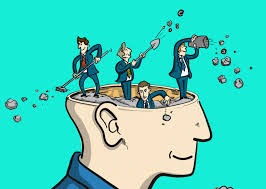
By the time we reach adulthood, our thinking is far from neutral. It has been shaped by decades of schooling, cultural narratives, institutional systems and professional expectations.
We absorb ideas about what success looks like, how careers should progress, what leadership means, how intelligence is measured, and what institutions are for. Most of these beliefs were never consciously chosen. They were simply inherited.
Over time they sink beneath the surface and become invisible assumptions. They feel like reality itself. But they are not reality. They are interpretations layered over reality.
The Illusion of the Blank Slate
Philosophers once described the mind as tabula rasa — a blank slate. The idea was that we could wipe the board clean and begin again from pure potential.
It’s an appealing thought, but it isn’t quite true. By adulthood, the slate is covered with writing. Language, culture, education and personal experiences all leave their mark. We carry those inscriptions with us wherever we go.
So reinvention is not a matter of wiping the slate clean. It is a matter of reading the slate carefully. Only when we see what has been written there can we decide whether it still belongs.
The Moment of Awareness
Sometimes that moment arrives unexpectedly. The Talking Heads captured it perfectly in Once in a Lifetime:
And you may ask yourself, “How do I work this?” And you may ask yourself, “Where is that large automobile?” And you may tell yourself, “This is not my beautiful house.” And you may tell yourself, “This is not my beautiful wife. … Same as it ever was, same as it ever was”
In that moment something subtle happens. The inherited script becomes visible. Life that once seemed inevitable suddenly feels… constructed.
The Hidden Power of Unlearning
Real transformation begins the moment our assumptions become visible. We start asking questions that were previously unthinkable.
Why do organisations operate this way? Why do we measure success this way? Why do we believe certain careers are prestigious and others are not? Why do we define intelligence in such narrow terms?
Some answers will reaffirm what we already believe. Others will reveal something surprising: that many of our most deeply held assumptions are simply cultural habits.
Practices repeated so often they begin to feel inevitable. What I call redundant rituals.
Arising, Passing Away
There is an old Buddhist insight known as anicca: the idea that everything is impermanent.
Everything arises. Everything passes away. Institutions change. Ideas evolve. Identities transform. What once seemed permanent eventually dissolves.
Impermanence is not a tragedy; it is the truth that frees us from attachment
Letting the days go by, let the water hold me down. Letting the days go by, water flowing underground.
Frameworks that once served a purpose eventually lose their relevance. But they often remain in place simply because no one stops to question them.
Reinvention Begins With Awareness
The first step in reinvention is not adding something new. It is untethering from the beliefs we never realised we were carrying.
Bringing them into the light of conscious awareness.
Once they are visible, we have a choice. We can reaffirm them deliberately. Or we can discard them. Either way, they no longer operate unconsciously.
A New Kind of Learning
If the purpose of education is simply to accumulate knowledge, then learning alone may be enough.
But if the purpose of education is wisdom, the process must begin somewhere deeper. Wisdom requires us to examine the assumptions through which we interpret the world.
It asks us not only what do we know? but also why do we believe what we know?
That question changes everything.
For many people that moment arrives quietly. The inherited framework becomes visible. The routines of life no longer feel inevitable.
Until one day it isn’t.
Because once the framework becomes visible, the possibility of reinvention opens.
Not through force. Not through endless self-improvement.
But through the quiet clarity that comes when we realise we are free to choose the next line of the story.