Jim Rohn once offered what sounds like an irresistible challenge: “The big challenge is to become all that you have the possibility of becoming.” It is classic personal development. Become more. Grow. Stretch yourself. Maximise your potential. Set bigger goals. Become all you can be.
But hidden inside this apparently empowering proposition is an assumption we rarely question.
To become all you could be requires us first to accept that you are not all you could be. Beneath that sits an even more confronting proposition: you are not whole.
Something must be missing. There must be a gap between the person you are and the person you might become. Personal development then offers us the bridge: goals, growth, challenge, achievement and effort. The destination is always somewhere beyond where we presently stand.
It is the same premise embedded in traditional goal setting. Establish where you are. Establish where you want to be. Measure the gap. Then start moving. The gap is not incidental to the model. The gap is its very precondition.
But what if the gap itself is the problem?
There is obviously a difference between our present form and some possible future form. I may not speak Mandarin today and speak it fluently five years from now. I may not run a marathon today and complete one next year. We learn, change, create and experience different forms. But difference is not deficiency.
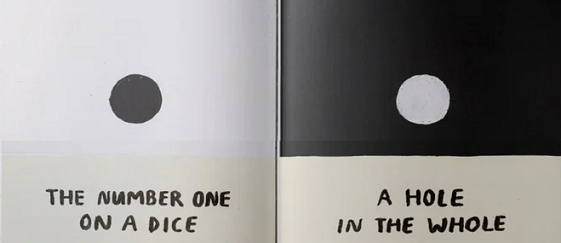
The moment we interpret possibility as evidence that something is missing, change becomes a remedy for lack. WHOLE acquires a hole. I begin pursuing something in the future in order to complete something supposedly incomplete in the present.
That brings us to another revealing phrase from Rohn: “maximize your human potential.” Potential has now become something we possess. We talk of MY potential, YOUR potential, untapped potential, unrealised potential and wasted potential. The language sounds perfectly natural because we have heard it all our lives.
But what exactly are we maximising?
Potential is not an amount. It is possibility.
And possibility does not diminish because one particular possibility wasn’t chosen. Perhaps potential isn’t something stored inside us waiting to be extracted. Perhaps we exist within a field of potential from which possibilities continually emerge.
Once potential becomes a possession, however, maximisation follows naturally. If I possess potential, I should use it. If I can use more of it, I should. If some remains unused, I have somehow fallen short. Potential quietly becomes an obligation.
And notice the language that follows: maximise, optimise, perform, produce, stretch, capacity, limits. The language of industrial production becomes the language of human development. The human being becomes another resource requiring ever greater utilisation.
There is also a logical problem with the injunction to become “all you can be.” You can’t. The destination doesn’t exist. Become one thing and another possibility immediately appears. Learn French and you could learn Italian. Run ten kilometres and perhaps you could run twenty. Build one business and you could build another. Write one book and another remains possible.
Every manifestation reveals another possibility. The supposed gap therefore cannot finally close. Who I am creates a goal; achievement produces another possibility; that possibility creates another gap. The personal-development machine can run forever.
Perhaps that helps explain why seeking itself can become a way of life. There is always another course, qualification, goal, guru or improved version of ourselves waiting somewhere over the horizon. We call it growth. But sometimes it may simply be dissatisfaction dressed as aspiration.
What happens if we remove the gap? Not possibility. Not learning. Not ambition, curiosity, achievement or creation. Simply the assumption of deficiency.
An entirely different proposition becomes available: I am WHOLE, and I can change. There is no contradiction between the two. I don’t have to become something else in order to complete myself. I can choose another possibility simply because I wish to experience what might emerge.
Change then no longer begins with an assumption that I am not enough. It begins with a question: what is possible?
That creates a profoundly different relationship with potential. Potential ceases to be something I must fulfil and becomes something from which I may choose.
Goals can still exist, but they no longer need to repair deficiency. Growth can occur without becoming an obligation. Achievement need not determine worth. Becoming no longer needs to compete with being.
Perhaps, then, Rohn’s “big challenge” deserves turning upside down. The challenge may not be to become all that you have the possibility of becoming, because possibility has no finish line.
The greater challenge may be recognising that you are already WHOLE, and from that place consciously choosing what might become.