
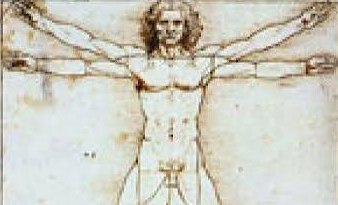
Ask the average spiritual seeker to name the symbols of masculine and feminine and they will probably reach for familiar imagery: the chalice and the blade or the phallus and the orb.
Even our most familiar symbols carry the same inheritance. The male symbol (♂) – a circle with an arrow pointing diagonally upwards – derives from the ancient astronomical symbol for Mars and has traditionally been associated with the shield and spear of the Roman god of war. The female symbol (♀) – a circle with a cross beneath it – derives from the astronomical symbol for Venus and has traditionally been associated with the hand mirror of the Roman goddess of love. Mars and Venus. Spear and mirror. Blade and chalice. Phallus and orb. Different symbols, same underlying assumption.
They are all gender-based.
They describe male and female anatomy, mythology and gender roles more readily than they describe masculine and feminine as energetic principles. We begin with gender and then infer the energy.
I’d like to offer an alternative hypothesis — one that is entirely independent of gender.
Perhaps it is best characterised in numerical terms: THE feminine is infinity. Masculine is One.
THE feminine is not a womb, a chalice, an orb or any other representation of the female form. THE feminine is infinity – unlimited potential, without boundary and before definition. Before something becomes something, every possibility remains available. THE feminine is the source of all creation.
Masculine begins when something becomes One. Its defining characteristic is not the phallus, the blade or the spear. It is individuation.
One thing. One thought. One word. One decision. One form. The moment something becomes this rather than that, distinction has occurred. Something has emerged from unlimited possibility and acquired definition. It can be identified, named and counted. It can be distinguished from everything it is not.
That is masculine.
But there is an important distinction between individuation and separation. For something to become distinct does not require it to become disconnected from that from which it arose. A wave can be identified as a wave without ever ceasing to be ocean. A branch can be distinguished from the tree without becoming independent of the tree. One can emerge from infinity without somehow finding itself outside infinity. Indeed, where would outside infinity be?
And this is where individuation can give rise to the Illusion of Separation. The illusion is not that you are an individual. Clearly, you are. The illusion occurs when individuality is mistaken for independence; when distinction is interpreted as disconnection; when I am One quietly becomes I am separate.
A masculine act of individuation is therefore not itself the problem. It is necessary for manifestation. Without distinction there is no thing, no thought, no word, no identity, no decision, no creation in form. The problem begins when One forgets where it came from, because the emergence of One creates something else at precisely the same moment.
Not-One.
The instant I identify this, I have also created that. The instant there is here, there is there. Self creates other. Inside creates outside. Subject creates object. The act of individuation doesn’t merely produce One; it creates the possibility of two.
One gives birth to polarity.
Polarity is not inherently problematic either. It is one of the consequences of manifestation. Hot and cold, light and dark, expansion and contraction, self and other: distinction allows us to experience a world of difference. But polarity remains contained within infinity. The existence of two distinguishable poles does not mean that either has somehow escaped the whole from which it arose.
The problem arises when we forget that.
When One forgets its relationship to THE feminine, polarity can become polarity consciousness: a way of experiencing reality in which the poles are no longer understood as differentiated expressions of an indivisible whole, but as separate and independent things. This becomes versus that. Me becomes versus you. Us becomes versus them. Mine becomes versus yours. Difference becomes separation.
And once separation becomes our organising assumption, an entirely different logic becomes possible. If I experience myself as separate from you, I can compare myself with you. If this is separate from that, I can measure one against the other. Once there are two, I can decide that one is bigger, faster, stronger, richer, better or more valuable than the other.
Comparison makes ranking possible. Ranking makes hierarchy possible. Separation makes ownership possible. If my interests are understood as separate from yours, I can maximise mine without necessarily accounting for yours. And if resources are understood as things existing independently of the whole, I can possess them, accumulate them and eventually seek to maximise my share of them.
The sequence becomes revealing:
Infinity → One → Polarity → Polarity Consciousness → Separation → Comparison → Measurement → Hierarchy → Competition → Accumulation → Maximisation.
None of this makes individuation or polarity inherently problematic. Quite the opposite. They make manifestation possible. Nor do comparison, measurement or even competition become inherently wrong merely because they sit downstream. The problem is more subtle than that. It is the consciousness from which we employ them.
The illusion begins when we mistake distinction for separation and then mistake separation for reality.
One has not actually left infinity. It has merely forgotten that it remains within it.
Perhaps this helps explain something much larger about the world we have created. We count things as though their numerical independence makes them relationally independent. We divide organisations into functions, economies into sectors, land into property, time into units, performance into measures and people into categories. The act of division can be enormously useful. It allows us to comprehend, organise and act. But the map can eventually obscure the territory.
What we separate conceptually can remain profoundly connected relationally.
A business can maximise profit and discover that employees, customers, communities and ecosystems were never actually external to the system upon which that profit depended. An individual can maximise income and discover that time, health, relationships and meaning were never separate variables. A society can pursue economic growth and eventually discover that the environment was never an externality.
The masculine capacity to distinguish is extraordinarily powerful. Indeed, without it very little of what we call civilisation could exist. We could not name, number, categorise, measure, analyse, organise or create form from possibility. The illusion is not distinction. The illusion is believing that what has been distinguished has therefore been disconnected.
And this introduces an important asymmetry between THE feminine and masculine. They are not two equivalent forces standing opposite one another. They are not two halves which, when reunited, somehow recreate a whole.
THE feminine is whole. It is the origin.
Infinity does not require One to complete it. One is already contained within infinity. Masculine, however, cannot exist independently of THE feminine because One must arise from somewhere. Individuation presupposes a field from which something can become individuated. Definition presupposes the undefined. Form presupposes potential.
And crucially, emergence from THE feminine does not mean departure from THE feminine. One remains within infinity.
THE feminine is the source; masculine is manifestation. THE feminine is possibility; masculine is definition. THE feminine is infinite; masculine is One. These are not competing forces seeking equilibrium. One is the field of unlimited potential; the other is what happens when possibility assumes form.
The journey is not about destroying individuality or somehow dissolving ourselves back into an undifferentiated whole. Nor is it about suppressing masculine in favour of THE feminine. It is about remembering the relationship: recognising oneself as One while remaining conscious of the infinity from which One arises; distinguishing without disconnecting; defining without forgetting relationship; individuating without succumbing to the Illusion of Separation.
And this is where our familiar symbolism has led us astray. By using male and female bodies to represent masculine and feminine, we have quietly converted a proposition about existence into a proposition about gender.
Masculine was never really the blade. Its defining characteristic was simply the moment infinity became One.
And our greater challenge began when One mistook itself for alone.