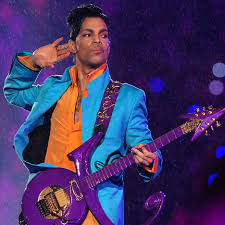
Prince: The Artist Who Became a Symbol

When Prince replaced his name with a glyph, the world laughed, argued, and searched for keyboards that could type it. But what he enacted was more than rebellion against a record label. It was a spiritual move, a conscious migration from form to field, from the masculine world of ownership and language to the feminine realm of resonance and universality.

From Name to Frequency

A name is a container. It defines, limits, locates. Names belong to contracts, to ledgers, to the architecture of patriarchy. They are how systems tag and trade identity. By refusing his, Prince stepped out of the linear alphabet and into vibration. His new mark, half male, half female, shaped like a horn, was not meant to be spoken but felt.

In that gesture he mirrored the feminine principle itself: undefinable, fluid, infinite. He declared, “I am not a product. I am a frequency.” The act was cosmological as much as cultural – a return to the pre-literate world where communication was song, rhythm, gesture, and symbol.

Breaking the Contract

His feud with Warner Bros. was about more than royalties; it was about sovereignty. The corporate world represents the masculine system in its purest form: hierarchy, ownership, measurement. Prince’s resistance was an act of feminine autonomy, reclaiming creation as something that cannot be possessed. By turning himself into an unpronounceable symbol, he created a loophole in language and law. The artist became unsignable. He re-entered mystery.

This is what The Rise of the Feminine names as the shift from control to flow: creation no longer bound by the structures that monetise it. The feminine doesn’t fight the system head-on; it slips between its lines and redefines the field.

Integration of the Poles

Prince embodied polarity with ease, the sacred and the sensual, the preacher and the seducer, lace and leather, falsetto and growl. He didn’t toggle between masculine and feminine; he fused them. The integration itself was his power source. Every performance was a sermon in balance: disciplined musicianship wrapped in ecstatic abandon.

He lived the TROTF principle that true creation emerges when opposites collaborate, light finding its depth in darkness, structure surrendering to spontaneity. In his music, the two energies made love in real time.

Symbol as Universal Language

The glyph united Mars and Venus with sound: ♂ + ♀ + 🎺 = ∞. That synthesis echoed the oldest cosmologies: Yin and Yang intertwined, the masculine and feminine generating life through rhythm. A symbol crosses languages; it belongs to everyone and no one. In adopting it, Prince restored art to universality.

He turned his very identity into a portal: you didn’t read him, you experienced him. That is the feminine mode of knowing, intuitive, relational, participatory. He reminded the world that meaning is not confined to words; it vibrates through sound, colour, and gesture.

Dissolving the Ego Form

To relinquish a name is to dissolve ego. Prince’s transformation was not only defiance but devotion, the same gesture mystics make when they surrender personal identity to merge with the infinite. The masculine says, “I am this.” The feminine whispers, “I am all.”

By disappearing into symbol, Prince became both subject and field, artist and artwork. He turned himself into resonance, which is the feminine state of being: continuous, porous, alive.

The Larger Movement

His evolution anticipated the age of self-definition we now inhabit, gender fluidity, independent publishing, direct creation, artists owning their masters, humans choosing symbols and handles instead of surnames. What looks like digital culture is, at its core, the feminine principle rising again: multiplicity over singularity, flow over form.

Prince did not invent that shift; he personified it. He showed that identity itself could be art, that liberation begins when language no longer owns you.

Light Born of Sound

Caravaggio painted the emergence of light from darkness. Prince composed the sound of form dissolving into frequency. Both revealed the same cosmology: the feminine as the unseen field from which all expression rises and to which all returns.

In every falsetto note, every shimmer of purple silk, Prince enacted the balance this work names, polarity held within universality. He reminded us that the highest act of creation is not assertion but integration.

The Legacy

Prince’s symbol still shimmers between worlds, part glyph, part soundwave, part invocation. It tells us that art, like consciousness, cannot be copyrighted. That the self is not a brand but a vibration. And that the feminine, when it rises, doesn’t destroy structure; it fills it with spirit.

He once said, “I’m not a woman. I’m not a man. I am something that you’ll never understand.” That was not arrogance. It was prophecy, the declaration of a new archetype: the integrated human, the artist as field.

Prince was not merely ahead of his time. He was time in motion – masculine precision and feminine flow dancing in perfect, purple balance.


Let Heart Guide Will: The Birth of Autonomous Leadership

For most of human history, leadership has been an act of will. We pushed, planned, controlled, and commanded — all expressions of the ego’s attempt to direct life from the outside. It worked for a while. It built bridges, cities, and empires. But the same force that built the world is now exhausting it.

We are witnessing the slow collapse of egoic leadership — a model that mistakes motion for meaning and control for coherence. The next evolution is not a better version of the self. It is the dissolution of the self as governor and the emergence of a deeper intelligence within us.


The Turning Point

The mystic Jeshua once said, “Let heart guide will.” It sounds simple, almost sentimental — until you realise it overturns the entire structure of power.

The ego, or will, was never meant to rule. Its true purpose is to serve consciousness — to give form to what the heart already knows. When heart guides will, leadership shifts from control to coherence, from domination to direction through resonance.


Will Without Heart

Will alone is linear. It sets goals, builds systems, and measures outcomes. But without the guidance of heart, it becomes blind ambition — intelligent yet disconnected. It moves energy but doesn’t align it. It conquers territory but loses meaning.

This is the paradigm of the old masculine — the executive mind that confuses authority with awareness. It is leadership as effort, not expression.


Heart Without Will

Conversely, heart without will drifts. It feels deeply, imagines endlessly, but struggles to anchor its knowing. It senses unity but can’t always translate that unity into action. The feminine field perceives everything, yet without the masculine’s grounding, its power dissipates.

When the two remain separate, both suffer: heart without will cannot manifest; will without heart cannot connect.


The Integration

To let heart guide will is to unite heaven and earth within the human system. The heart perceives; the will performs. The heart intuits direction; the will delivers it into form. This is not hierarchy but harmony — not heart above will, but heart through will.

When the ego surrenders to the heart, it doesn’t vanish. It is repurposed. It becomes the instrument through which consciousness conducts life. The self no longer claims authorship; it becomes authorship in motion.


The Collapse of the Ego

This integration feels, at first, like collapse. The structures of certainty dissolve. Identity softens. The inner voice that once shouted, “I know what to do!” begins to whisper, “Something deeper knows.”

This is not weakness; it is realignment. The will still acts, but now it acts in service of coherence. It is decisive without aggression, powerful without resistance.

Ego becomes executor, not emperor. The energy that once served self-preservation is redirected toward self-realisation.


The Mechanics of Autonomous Leadership

Autonomous leadership begins where self-leadership ends. It is not empowerment — it is embodiment. Self-leadership says, “I choose.” Autonomous leadership says, “Choice moves through me.”

The difference is profound. In the first, the ego drives; in the second, consciousness steers. The heart becomes the governance system — a living interface between awareness and action.

Through this orientation:

  • Thought follows intuition.
  • Strategy follows truth.
  • Doing follows being.

This is leadership by field, not formula — influence through frequency rather than force.


The Science of Coherence

Even neuroscience hints at this transition. The heart’s electromagnetic field is exponentially stronger than the brain’s. When heart and brain synchronize — a state known as coherence — clarity, creativity, and compassion increase simultaneously. In that harmony, decisions emerge without friction; action feels inevitable rather than effortful.

So when Jeshua said, “Let heart guide will,” he was also describing a biophysical reality: when coherence leads, chaos recedes.


The New Architecture of Power

Autonomous leadership reframes power as presence. Authority is no longer imposed; it is felt. Others follow not because they are instructed, but because the frequency of truth is unmistakable. It stabilizes the space. It reorganizes the field.

This is leadership without a leader — consciousness governing itself through coherent human hearts.


Living the Practice

To live this way requires three disciplines:

  1. Stillness — to hear the heart before the mind speaks.
  2. Surrender — to let awareness, not agenda, shape direction.
  3. Service — to act as a clear instrument through which consciousness moves.

Each dissolves a layer of the ego’s interference, allowing leadership to arise naturally — like breath returning after struggle.


The Invitation

We are not here to destroy the ego but to redeploy it. Its precision, logic, and strength are gifts — when they are in service to heart consciousness. When heart guides will, autonomy no longer means independence; it means alignment with the whole.

This is the threshold humanity stands upon — the movement from self-directed to soul-directed leadership. It is the birth of the autonomous leader: the one through whom consciousness leads effortlessly, wisely, and whole.


In the end, there is no driver — only awareness in motion. The will obeys the heart, and the heart speaks for consciousness. That is the architecture of the new world.

The Everyday Art of Coping Strategies

We like to imagine that burnout happens suddenly — a breaking point, a collapse, a dramatic fall from grace. But the truth is quieter and far more insidious. Burnout rarely begins with exhaustion; it begins with adaptation. Every day we make small, almost invisible adjustments to survive the unsustainable. A second coffee to get moving. A scroll through social media to take the edge off. A glass of wine to wind down. These seem harmless enough, until you realise they’ve become habits — rituals of endurance woven into the fabric of ordinary life.

Stress rarely barges in; it seeps. It reshapes how we live, work, and recover, teaching us to accommodate the imbalance rather than question it.

We tell ourselves we’re managing, but what we’re really doing is coping — cleverly, subconsciously, and endlessly. The most dangerous form of stress isn’t the kind that knocks you over. It’s the kind you learn to live with, the one that convinces you you’re fine simply because you’ve found a way to function.

Coping isn’t weakness. It’s intelligence.

It’s the body and mind collaborating to keep you in motion when everything around you is demanding more than you have to give. But when coping becomes the only way you function, it’s no longer a strategy — it’s a symptom. The small adjustments that once helped you through the day slowly become the very signs that you’ve been running on empty.

Coping doesn’t always look dramatic.

More often, it looks ordinary — familiar, even respectable. It hides in plain sight. You’ll find it in the extra shot of coffee, the midnight scrolling, the post-work drinks, or the comfort meal that soothes without restoring. These acts are so normalised that we rarely question them. Yet each one quietly tells the same story: that something in our environment — or within us — is out of balance.

Consider how easily these patterns accumulate. Caffeine becomes the morning ignition, a chemical permission slip to override fatigue. Sugar hits provide the midday spike to sustain what caffeine can’t — not sweetness, but the illusion of energy. Smoking offers a ritualised pause disguised as relief; it isn’t the nicotine that calms you, it’s the breath you finally take. Comfort food soothes the stress cycle but never resolves it. Scrolling offers digital dissociation dressed up as downtime. Even “resting your eyes” becomes a polite rebrand of exhaustion. Walks for back pain shift from wellness to ergonomic triage. And drinks after work provide the collective exhale of a system that doesn’t know how to rest. It’s not celebration; it’s sedation.

Individually, none of these behaviours are catastrophic. In fact, they often help us make it through the day. But together, they form a rhythm — a loop of stimulation and sedation that replaces true balance. We caffeinate to start the day and anaesthetise to end it.

Morning stimulation, evening sedation.

It looks like rhythm, but it’s really regulation — artificial, reactive, and exhausting. A natural rhythm replenishes; it expands and contracts like breath. A coping rhythm depletes; it oscillates between extremes. We call it balance, but it’s closer to endurance.

The tragedy of modern work is that we’ve normalised this pattern. We’ve built an entire culture around constant activation, confusing motion with momentum and busyness with value. We praise the ability to push through, to keep going, to perform under pressure, as though the goal of leadership were to tolerate strain rather than to remove it. Resilience becomes the virtue, but coping is the lived reality — an endless dance between effort and escape.

The brilliance of the human system is its adaptability. The danger lies in that same brilliance.

Because when stress becomes constant, we adapt to it. We modify our habits, our routines, even our identities to keep functioning within dysfunction. We call it discipline. We call it professionalism. But in truth, it’s accommodation. We’re adjusting to an environment that’s out of alignment with our natural state. Every small coping act is a negotiation with depletion — a way to manage the dissonance between what we’re capable of and what we’re asked to sustain. Over time, those negotiations become normalised. Coping becomes culture.

The first step out of that loop isn’t another hack or routine. It’s awareness. Coping isn’t something to fix; it’s something to see. When you recognise that the extra coffee, the endless scrolling, or the nightly glass of wine aren’t random choices but signals, your consciousness shifts. You stop asking, “How can I cope better?” and you start asking, “Why do I need to?” That’s the moment where leadership — real, conscious leadership — begins. Because awareness is contagious. Once you see your own coping patterns, you begin to notice them in others, in teams, in systems.

A conscious leader doesn’t shame the behaviour. They observe it. They ask what it’s trying to say.

  • Is the caffeine masking chronic fatigue?
  • Is the scrolling a craving for rest or for connection?
  • Is the wine the only way to silence a mind that never switches off?

Each pattern holds information. Each one is feedback. Coping is not failure; it’s evidence that something — in the system or within you — is out of rhythm. The goal isn’t to eliminate coping. It’s to make it unnecessary.

The everyday art of coping is quiet, clever, and deceptively normal. But every time you reach for the thing that gets you through the day, pause and ask: Is this nourishment, or negotiation? Because when the smallest comforts start to feel like survival tools, it’s time to stop managing the symptoms and start redesigning the system.

Coping isn’t a sign of resilience. It’s a signal — a whisper that balance has been lost. And the moment you can name it, you’re already on your way back to alignment.

Are You Afraid of the Dark — or Just Afraid of the Absence of Light?

For many of us our childhood experience taught us to be afraid of the dark. But what if that fear isn’t about darkness at all? What if the real fear is premised on the absence of light, and not the presence of dark? Perhaps the illusion is that light is the default setting.

This is the role reversal no one talks about: We treat light as the natural state — and darkness as the interruption. But it’s not. Darkness is the origin. It’s what was here before anything else. It’s where everything begins.

So, how did we get so fearful of returning to Oneness? Is it that the illusion of light became so entrenched in our experience that we crave it’s return to the point of mistaking light for the eternal state.


The Lie of the Absence

Night is described as the absence of light, as if light were the truth and darkness a failure to achieve it.

But that definition reveals our bias. We define night by what it lacks, not by what it is. As if the sun is permanent and darkness only arrives when the light is switched off.

That’s not how it works.

The light is temporary. The sun rises and sets. Flames flicker. Bulbs burn out.

But darkness? Darkness doesn’t come and go. It’s always there.

Darkness is a necessary pre-condition to enable us to see the reflection of light. Light exists in the contrast of dark, darkness not so.


The Default State of the Universe

Darkness isn’t nothingness. It’s everything before anything becomes something.

It’s not the absence of form. It’s the infinite potential before form is made manifest.

It doesn’t represent death or danger. It represents origin.

This is the part we’ve forgotten:

“Darkness is the infinite potential of the universe before anything is made manifest.”

So when we say we’re afraid of the dark, we’re not really talking about fear of harm, or what we can’t see.

We’re talking about something deeper: The fear of being returned to something we cannot control. The fear that what we call light was never the full story.


The Night Doesn’t Lie

Night reveals the truth we hide from in daylight: That silence is older than sound. That stillness is older than movement. That darkness doesn’t end us — it receives us.

We were never separate from it. We just forgot.

We don’t fear the dark. We fear the return. And what that return says about who we’ve always been.

Next time you step into the night, don’t ask what you’re afraid of. Ask what you’re returning to. Ask what you used to know — before the light arrived.

Because the truth is simple: We’re not here to fight the dark. We’re here to remember it.

Why Are Black Markets So Appealing

For the past few weeks I’ve been reading reports on the growth of offshore gambling markets. The policy conversation usually centres on enforcement — geo-blocking, payment restrictions, and tighter regulation.

But it raised a broader question for me.

Why do otherwise law-abiding consumers leave the regulated system in the first place?

History suggests the answer isn’t always criminal intent. Often it’s simply market imbalance.


The Signal Before the Shift

When a gap opens between price, access, or regulation and consumer behaviour, parallel markets appear.

Sometimes they’re illegal. Sometimes they’re grey markets. But economically they serve the same purpose: they close the gap.

You can see this pattern everywhere.

When Tom Ford cologne sells for $450 a bottle, knock-offs inevitably appear. Not because consumers reject the brand, but because the premium creates room for imitation.

Illegal tobacco works the same way. In Australia, high excise taxes have pushed cigarette prices among the highest in the world. The response has been a surge in black-market imports — brands like Manchester arriving through channels far outside the regulated system.

The early internet provided another example. Pirated movies and music exploded not because consumers suddenly embraced illegality, but because the legal market was expensive, fragmented and inconvenient. Once Spotify and Netflix reduced friction, piracy declined dramatically.

Even telecommunications followed the same path.

When the Australian telecom market deregulated, Telstra still operated with pricing structures designed for a monopoly era. A wave of aggregators emerged who simply reproduced Telstra bills on their own letterhead, claiming bulk discounts and sharing some of the savings with customers.

They weren’t building infrastructure. They were exploiting pricing opacity and margin gaps.

Their existence forced the market to evolve.


Gambling’s Version of the Same Story

Today gambling may be experiencing a similar moment.

Over time, regulatory controls, taxes, product restrictions and compliance requirements have steadily increased across licensed operators.

The policy objective is clear: reduce harm and protect consumers.

But the behavioural response appears to be shifting.

Offshore operators — beyond the reach of domestic regulators — offer fewer restrictions, better odds and fewer identity checks. Technology has made access simple. A smartphone and an internet connection is often all that’s required.

The result is the emergence of a parallel wagering ecosystem operating outside the regulated framework.


The Broader Insight

These examples share a common thread.

Black markets rarely emerge because people suddenly become criminals.

They emerge when the regulated system drifts too far from the behaviour it is trying to govern.

At that point, alternatives appear — sometimes illegal, sometimes innovative — but always responding to the same imbalance.

Which raises a more interesting policy question.

Not whether regulation is necessary.

But where the tipping point lies between regulation that shapes behaviour and regulation that drives behaviour elsewhere.

Because when markets go dark, the activity rarely disappears.

It simply moves somewhere else.

Why Some Dubai Residents Are Suddenly Rushing Back

You may have seen headlines suggesting Dubai residents are racing back to the UAE to avoid massive tax bills. At first glance it sounds strange. After all, Dubai has no personal income tax.

So what’s really going on?

The explanation lies in a very specific tax rule tied to tax residency, not a new tax in Dubai itself.

Dubai’s tax advantage only works if you actually live there

The UAE famously has no personal income tax for most individuals. That is why thousands of professionals, entrepreneurs and investors from the UK, Europe and elsewhere have relocated there over the past two decades.

But the tax advantage only applies if you genuinely qualify as a UAE tax resident. For most people that means spending 183 days in the country within a 12-month period, or at least 90 days combined with a home or work base in the UAE.

If someone fails those tests, another country — usually the one they originally came from — can treat them as tax resident again. And that can completely change their tax position.

The problem: some expats were stuck abroad

Recent geopolitical tensions in the Middle East disrupted travel across the region. Some Dubai-based expatriates suddenly found themselves unable, or reluctant, to return to the UAE immediately.

For many people that created a problem they had not anticipated. If they remain outside the country too long, they risk failing the minimum-day residency threshold that supports their tax position.

Once that threshold is missed, the tax consequences can escalate quickly.

Why the tax bills can become enormous

If a person becomes tax resident again in a high-tax country such as the UK or parts of Europe, their global income becomes taxable there. For high earners that can mean marginal tax rates of 45 percent or more.

Missing a residency threshold by only a few weeks could therefore trigger hundreds of thousands — sometimes millions — in tax liability. Because Dubai does not withhold income tax, the bill can arrive later and all at once.

That is why reports suggest some residents are chartering private jets back to Dubai simply to preserve their residency status. A $100,000 flight becomes cheap insurance if it prevents a multi-million-dollar tax bill.

Governments are tightening enforcement

Another shift is happening behind the scenes. Tax authorities have become much more sophisticated in identifying so-called “stealth expatriates.”

Authorities now cross-reference airline travel records, financial account activity, property ownership and immigration data. It is increasingly easy for governments to reconstruct where someone has actually been living.

The days of casually claiming overseas residency are largely over.

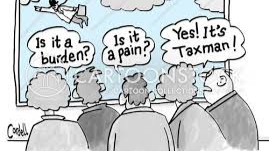
Hey, I’m the taxman

Dubai residents are not rushing back because Dubai suddenly introduced a new tax. The issue is that if they remain outside the country too long, another jurisdiction may claim the right to tax them instead.

And for high-earning professionals, that can produce an extremely large bill.

In today’s world, tax residency is no longer just about where you say you live. It is increasingly about where the system can prove you were.

Just Because You Did It Doesn’t Mean You’re Guilty

A billboard once declared: “Just because you did it doesn’t mean you’re guilty.”

At first glance, it feels absurd. Of course doing something makes you guilty… doesn’t it?

But the longer you sit with the sentence, the more unsettling it becomes. Because both the legal system and the human emotional system quietly agree with the billboard: doing the thing and being guilty of the thing are not the same.

And yet in everyday life, we treat them as identical.


The coaching idea we all know

In coaching we often hear that between stimulus and response there is a space.

Something happens. Then we respond.

We like to imagine this space as calm, rational and intentional — a moment where we pause, reflect and choose wisely.

But in real life, something far more complicated usually happens in that gap.

Before we ever respond, we run an invisible five-step process.


The hidden chain inside the gap

What actually happens looks more like this:

Stimulus → Emotion → Judgement → Sentence → Response

By the time we respond to the world, we are rarely reacting to what happened. We are reacting to the verdict we have already passed on ourselves.


Step 1 — Stimulus: The event

Something happens.

You say the wrong thing in a meeting. You disappoint someone. You make a mistake. You forget, fail, misjudge, react, or fall short.

This is simply reality. An action. An outcome. A moment in time.

No meaning yet. No judgement. Just the event.


Step 2 — Emotion: The first wave

Then comes the first emotional response:

  • discomfort
  • regret
  • sadness
  • concern
  • empathy
  • fear
  • frustration

This is the nervous system reacting to consequences. It is human, automatic and immediate.

At this stage, there is still no guilt. Only feeling.


Step 3 — Judgement: The hidden verdict

Then something subtle happens.

Almost instantly, the mind adds meaning:

  • I shouldn’t have done that.
  • I messed up.
  • That was wrong.
  • I failed.
  • I’m to blame.

This is the step we rarely notice.

This is the internal verdict.

The emotional system has quietly moved from feeling to judging.

This is the moment guilt is born.

Because guilt is not simply a feeling — it is a judgement layered on top of a feeling.


Step 4 — Sentence: The punishment we impose

Once we decide we are guilty, punishment follows.

Not legal punishment. Emotional punishment.

We sentence ourselves to:

  • rumination
  • anxiety
  • self-criticism
  • perfectionism
  • withdrawal
  • overworking
  • people-pleasing
  • replaying the event repeatedly

We believe punishment proves we care. We believe self-criticism prevents future mistakes. We believe discomfort is the price of being a good person.

So we become our own judge and sentencing court.


Step 5 — Response: The behaviour the world sees

Only now do we respond outwardly.

We apologise too quickly. We avoid difficult conversations. We become defensive. We overcompensate. We shut down. We try to fix everything. We work harder than necessary. We withdraw.

We believe we are responding to the event.

But in truth, we are responding to the sentence.


The lesson the legal system already knows

Courts separate these steps deliberately.

First they ask: Did you do the act? Only later do they ask: What should happen now?

The legal system recognises something our emotional system forgets:

Action alone is not guilt.

There must be investigation, context, intention and meaning before a verdict is reached.

The law insists on a pause that the mind rarely grants itself.


The small space that changes everything

There is a small but powerful space between:

I did the thing. and I am guilty.

Inside that space lives context. Intention. Learning. Growth. Compassion.

But most of us cross that distance in seconds.

We move straight from stimulus to sentence, barely noticing the trial in between.


Returning to the billboard

The billboard feels funny because it interrupts the shortcut.

It forces us to pause and consider a possibility we rarely offer ourselves:

What if doing the thing doesn’t automatically make me guilty?

The law pauses before declaring guilt. It asks questions. It considers context. It looks for intention.

What if we offered ourselves the same pause?

What if doing the thing doesn’t automatically make me guilty — at law, and at the level of my own emotional vibration?

Dark Friday: Why We’re Still Afraid of the Dark

Today is Friday the 13th — a date wrapped in superstition, myths and quiet unease. For centuries it has been labelled unlucky, ominous and dangerous. We even dress it in black. But that choice of word hides something deeper. This day isn’t really about a colour. It’s about a feeling. And perhaps we’ve been calling it the wrong thing all along.

What we call Black Friday may be more accurately described as Dark Friday.

Because the fear has never been about black. It has always been about what we cannot see.

Friday the 13th sits at the intersection of fear and superstition, and superstition always points to the same place: the unknown, the unseen, the unexplained. Darkness is where certainty disappears. It is where control weakens and answers stop. When we cannot see clearly, the mind rushes to fill the gap. And what it often fills it with is fear.

This is how darkness became symbolic. Not because darkness itself is dangerous, but because ignorance feels dangerous. Over time, darkness came to represent not knowing, not understanding and not being in control. It became shorthand for uncertainty — the place where the familiar rules no longer seem to apply.

Beneath all of this sits something even deeper: separation.

In the dark, we feel separated from certainty, separated from control and, most importantly, separated from truth. Not personal opinion or belief, but universal truth — the kind that exists whether we perceive it or not. When we cannot see truth, cannot verify it and cannot prove it, the human mind instinctively reaches for stories. Curses, omens and bad luck are simply narratives designed to make the unknown feel explainable.

Friday the 13th is not unlucky. It is a mirror. It reflects how uncomfortable we are when we cannot see clearly and when the illusion of certainty fades.

And perhaps that is the quiet invitation hidden inside this day. Not to fear the dark, but to bring light to it. To question the stories we inherit. To move toward truth instead of away from uncertainty. Because darkness itself is never the real threat — fear is.

As Franklin D. Roosevelt reminded the world in a time of collective uncertainty, “The only thing we have to fear is fear itself.” And maybe the deeper reminder is this:

That which isn’t known… can be known.

Darkness is not the end of the story. It is the beginning of discovery.

Stop Judging Your Emotions

We’ve been told emotions cloud judgement. What if judgement is what clouds emotion?

This reversal is uncomfortable because it challenges a belief most of us never question. We are taught that emotion is distortion and judgement is clarity. Emotion is impulsive, messy, unreliable. Judgement is rational, measured, and safe. Yet lived experience often reveals the opposite. Emotions are usually simple and direct, while judgement is what complicates them.

Most emotional suffering does not begin with emotion. It begins with the judgement of emotion. Anxiety appears, sadness arrives, anger rises, fear tightens the chest. These are natural human responses – automatic, biological, and deeply intelligent. They are signals from the nervous system, not moral failures. Yet almost immediately, something else appears: a second reaction, a second voice, a second emotion. I shouldn’t feel this. In that moment, a quiet escalation begins.

Emotions are fast. They arise before language, before analysis, before reasoning. They are the body’s way of responding to uncertainty, change, threat, loss, connection, and possibility. Fear prepares the body for protection, anger signals a boundary has been crossed, sadness marks loss or transition, and anxiety anticipates the unknown. The first emotion is not a decision; it is a response. It arrives uninvited and without permission. The nervous system moves before the thinking mind catches up.

Judgement arrives more slowly. It speaks in sentences. This is not appropriate. This is weak. This shouldn’t be happening. Why can’t I handle this better? This is the moment emotion becomes personal. Not just I feel anxious, but I shouldn’t feel anxious. Not just I feel sad, but something must be wrong with me. The experience has moved from sensation to evaluation. The second emotion has entered the room, and it is usually heavier than the first.

The escalation loop is deceptively simple. A feeling appears. The feeling is judged. Resistance increases tension. The original emotion intensifies. The stronger emotion invites stronger judgement. What began as a single wave becomes a storm. Anxiety becomes anxiety about anxiety. Sadness becomes shame about sadness. Anger becomes guilt about anger. Fear becomes fear of fear. The emotional experience doubles in weight, not because the original feeling grew stronger, but because resistance entered the system.

Emotion is movement in the nervous system. Judgement is resistance to that movement. When the mind says this must stop, the body prepares for conflict. Breath shortens, muscles contract, attention narrows, and the system moves into defence. The nervous system interprets resistance as danger. If the mind is sounding the alarm, the body assumes the threat must be real. So the body increases the signal. What could have passed through begins to linger. What could have softened begins to harden. What could have moved begins to loop.

Over time, this creates a powerful misunderstanding: emotions feel dangerous. Not because of the feelings themselves, but because of what follows them – the judgement, the resistance, and the escalation. People begin to fear their own internal weather. They start trying to manage, suppress, optimise, and control what was never meant to be controlled. Emotional life becomes something to perform rather than something to experience.

There is also a cultural layer to this loop.

Many of us learned early which emotions were acceptable. Happiness is welcome, excitement is praised, and confidence is rewarded. But anxiety is questioned, anger is discouraged, and sadness is quietly avoided. Over time, this creates a hierarchy of emotional permission. We begin to believe that some feelings belong and others do not. When disallowed emotions arise, judgement appears almost instantly.

Modern life reinforces this pattern by encouraging emotional optimisation. We try to fix feelings, replace feelings, override feelings, and upgrade feelings. People monitor themselves constantly: Am I calm enough? Confident enough? Positive enough? Resilient enough? This ongoing self-surveillance is exhausting. Not because emotions are exhausting, but because constant judgement is.

Imagine trying to stop the rain by arguing with the sky. Imagine trying to halt the tide by disapproving of the ocean.

This is what judgement asks the nervous system to do. Emotions are weather patterns in the body. They move in, move through, and move on. But when resistance appears, the weather stalls. Storms linger over land that refuses to let them pass.

Breaking the escalation loop is surprisingly simple. Not easy, but simple.

It does not involve removing emotion, replacing emotion, or fixing emotion. It begins with pausing judgement. This pause creates space between the first emotion and the second. In that space, something changes. The nervous system no longer receives a signal of internal danger. The body no longer prepares for conflict. The system no longer amplifies the signal.

Without resistance, the emotional cycle completes. The wave rises, the wave crests, and the wave falls. Emotions were never designed to stay forever. They were designed to move. When judgement pauses, movement returns. And with movement comes relief.

Your emotions were never the problem. Judgement was the fog that made them hard to see.

Paganism: The Original Feminine Field

Long before civilisation built temples of stone or hierarchies of doctrine, there was an older, quieter religion. It had no name because it didn’t need one. The people who practised it didn’t think of themselves as “pagan”; they were simply in relationship with the world around them.

To the early agrarian mind, the universe was alive, rhythmic, and cyclical. Life came from the soil, returned to it, and rose again. The divine was not distant; it pulsed through every seed, tide, and birth. Where monotheism later placed God above creation, paganism saw divinity within creation. It was the original feminine field: spacious, generative, relational, forever renewing itself through contrast – day and night, sowing and harvest, birth and decay.

When monotheism arrived, it brought a new structure of knowing. The infinite was given a throne. Mystery became commandment. The feminine principle – fluid, cyclical, intuitive – was recast as chaos, temptation, or heresy. Pagan altars were dismantled, yet the festivals remained. Beltane became May Day; Samhain became All Saints; Yule became Christmas. The feminine field went underground, hiding in custom and folklore. In energetic terms, this was the shift from mythos to logos: from a participatory cosmos to a managed world. The masculine principle of order overtook the feminine principle of flow.

For a thousand years, that field ran beneath civilisation’s surface. It whispered through herbalists, midwives, and storytellers – the so-called witches who tended body and spirit when official religion could only offer confession. Their knowledge of plants, moon cycles, and dreams wasn’t superstition; it was embodied science before the age of abstraction. Every generation tried to burn it out; every generation found it alive again in some other form.

By the eighteenth century, the Enlightenment had replaced miracle with mechanism. Yet the same rational light that exposed superstition also revealed a new void. The world could now be measured but no longer felt. Artists and poets began to sense what was missing: the sacred texture of life itself. The Romantic movement was the first intellectual re-flowering of the pagan feminine – an instinctive correction to the dryness of pure reason.

Today, the field re-emerges under many names: Wicca, Goddess spirituality, eco-feminism, systems thinking, regenerative design. All share the same root principle: life as relationship, not hierarchy. We are no longer outside nature studying it; we are nature becoming conscious of itself. In the pagan worldview, that realisation is initiation – the moment the spiral completes its turn.

Paganism isn’t about reviving old rituals for nostalgia’s sake; it’s about remembering what those rituals encoded: that balance is dynamic, not static; that creation and destruction are partners; that wisdom lives in cycles, not decrees. In the language of energy, the pagan world was the feminine in full expression – the field before the form. What we call “The Rise of the Feminine” is really the return of that field to collective awareness.

The Goddess was never gone. She simply changed her name to Silence and waited for us to listen again.