We were taught that computers speak in 1s and 0s. On or off. Yes or no. Binary thinking. Masculine thinking.
But quantum computing is changing everything. And not just technologically. Energetically.
From Force to Frequency
Classical computing is built on force—voltage pushing electrons through circuits. It’s about control, containment, and certainty. It reflects a world obsessed with speed, power, and logic. Sound familiar?
Quantum computing, by contrast, operates in a field of infinite potential.
It doesn’t force electrons into motion—it lets photons dance. It doesn’t rely on certainty—it thrives in possibility. It doesn’t collapse everything into black or white—it exists in grey, shimmer, and superposition.
In other words: Quantum computing doesn’t just compute differently. It relates differently.
That’s not masculine energy. That’s feminine intelligence.
Light & Glass: The Feminine Codes
What are the building blocks of quantum computing?
✨ Light (photons) — fast, subtle, and unpredictable. 🩵 Glass — receptive, transparent, and flexible.
We’re moving from silicon and electricity (force, friction, heat)… to glass and light (clarity, resonance, velocity).
This isn’t just a hardware evolution. It’s an energetic shift.
From command to collaboration. From fixed to fluid. From domination to dance.
Quantum as Metaphor
Quantum computing isn’t just a breakthrough in science. It’s a mirror for what’s happening in leadership, business, and consciousness.
It reminds us:
You can hold multiple truths at once.
You can act without certainty.
You can lead without control.
You can move forward without knowing the outcome.
That’s the feminine way. Not indecisive. Not chaotic. Expansive. Relational. Emergent.
From Binary to Both-And
The world we built on binary thinking is breaking down. Our systems are too rigid. Our logic too linear. We tried to code complexity with “yes/no” inputs.
But we’re not binary. We never were.
Quantum computing says: you can be both. Here and there. Known and unknown. 1 and ∞.
The Rise of the Feminine isn’t just a cultural moment. It’s a physics lesson.
The Future is Feminine-Coded
Photonic quantum computing isn’t the endpoint. It’s a signal. That the world is shifting away from brute force and into coherence. That the old maps don’t work in the new terrain. That we are being invited to relate differently—to ourselves, each other, and the systems we build.
Because the future won’t be powered by more power.
It will be powered by presence, perception, and possibility.
The next frontier in computing isn’t about control—it’s about coherence. Welcome to the era of feminine-coded intelligence.
The future isn’t binary. It’s quantum. It’s relational. It’s feminine. And it’s already here.
A Feminine Reframe of the Housing Crisis—and the System That Created It
A recent headline in the daily paper read: “Fast-Tracked Affordable Homes Key to Solving the Housing Crisis.”
It was meant to be hopeful. A signal of government responsiveness. A nod to the millions struggling under housing stress.
But it was also deeply revealing.
Because the solution offered—like most in the housing debate—rested on a quiet, unchallenged assumption:
That home ownership is the goal. That if we could just help more people own more houses faster, we’d be okay.
But we’re not okay. Not even close.
And maybe that’s because we’re solving the wrong problem.
We Don’t Have a Housing Crisis.
We have a belief crisis. And beneath that? A systemic imbalance.
While policymakers and pundits frame the issue as inequity—the gap between haves and have-nots—the deeper issue is imbalance: between values, energy, incentives, and assumptions.
This isn’t just about who has more. It’s about what we’ve overvalued, what we’ve undernourished, and what we’ve refused to question.
⚖️ Imbalance vs Inequity
Let’s get clear.
Inequity is about fairness: Who owns, who rents, who struggles, who soars. Imbalance is about alignment: What systems are tilted too far in one direction—regardless of how evenly their burdens are distributed.
You can correct inequity and still remain completely out of balance.
And nowhere is that more obvious than in our housing system.
🏠 The Architecture of Imbalance
Consider this:
Banks routinely lend up to 90% of the property’s value
First home buyers are encouraged to borrow six to seven times their income
Up to 50% of take-home pay is now considered “acceptable” to devote to housing
The average mortgage in Australia is now around $880,000
Governments actively inflate prices through grants, incentives, and planning loopholes
And all of this is to help people… own?
What if that’s not the solution? What if ownership is the problem?
🧱 The System Is Designed to Protect One Side of the Balance Sheet
It’s not just that housing is unaffordable. It’s that the system was never designed to prioritise affordability in the first place.
Instead, we have three major institutional forces working in tight formation:
The property industry, which profits from scarcity and urgency
The finance sector, which profits from lifelong debt
The government, which profits from asset inflation, stamp duty, and GDP optics
They protect one class of people: those who already own.
It’s not conspiracy—it’s structure. A system biased toward those holding the assets, not those seeking access to shelter.
📏 The Shrinking Dream
Once, the Australian dream was a quarter-acre block. I owned 650 square metres in leafy Wahroonga for a while. That felt good—until it didn’t. I remember aspiring to 1,000 sqm, because that’s what the “real” success stories had.
But now? We’re down to 50 sqm apartments being marketed as “starter homes.” Tiny homes. Pods. Studios. Shared kitchens. Micro-living.
Meanwhile, mortgages have grown, expectations have shrunk, and somehow the dream stays alive.
Why?
Because we’ve made home ownership the marker of:
Adulthood
Legitimacy
Maturity
Stability
Identity
It’s no longer about how you live. It’s about what you own—or don’t.
🌱 Even the Green Alternatives Can Carry the Same Imbalance
Here’s the twist: even progressive alternatives—those pushing for sustainability, urban farming, tiny homes, permaculture—can fall into the same trap. Not because utility is bad (it isn’t), but because they often carry the same masculine energy of pressure, performance, and optimisation.
“The lawn is waste.” “Turn it into food.” “Don’t just sit there—use it.”
But here’s the distinction:
Utility is not the problem.
Compulsion is.
Imbalance is.
The feminine doesn’t reject utility—it reclaims it. It says: “Use the land. But don’t be used by it.” It honours space, movement, and choice—not just productivity.
“When utility becomes performance, the imbalance remains.”
🌀 The Feminine Reframe: This Is About Energy, Not Economics
The deeper truth is energetic, not ideological.
We are living in masculine-coded systems:
Structured
Hierarchical
Asset-driven
Output-obsessed
Performance-based
And they are breaking down.
The Rise of the Feminine is not about flipping the script. It’s about rebalancing:
Ownership ↔ Utility
Asset value ↔ Human value
Permanence ↔ Mobility
Productivity ↔ Presence
Control ↔ Relationship
This isn’t a political correction—it’s an energetic one. A movement away from over-structuring, over-leveraging, and over-identifying with things we can own. And a return to things we can actually live with.
This is not about fairness. It’s about flow.
🧠 The Unasked Questions
Here are five questions you’ll rarely hear in policy circles—but should be at the centre of every housing debate:
Why must everyone own their home?
Why is renting treated like failure, not freedom?
Why do banks lend up to 90% on an asset that may fall in value?
Why is it acceptable to devote a third or more of your income to shelter?
Why do we still assume house prices must always go up?
Until we confront these, we’re not solving a crisis—we’re just resuscitating a myth.
🔁 A System in Need of Rebalancing
A truly sustainable housing model doesn’t just address inequity—it restores balance. It prioritises utility over ownership. Relationship over possession. Flow over fixation.
It offers room to live—not just room to borrow against.
“The housing crisis is not simply a crisis of who has more. It’s a crisis of what we’ve chosen to value.”
We’ve overinvested in property. Underinvested in people. And lost the plot somewhere between bricks, bank loans, and belief systems.
It’s time to stop asking how we can help more people “get on the ladder.”
Why it’s time to rethink how we reward property ownership—and rebalance the housing system.
By Dennis Roberts | July 16, 2025
We talk a lot about the housing crisis. But we don’t talk nearly enough about the assumptions that created it.
Here’s one that rarely gets questioned:
If you buy a house with 20% of your own money and 80% from the bank, you’re entitled to 100% of the capital growth.
Seems fair, right? It’s how the system works. It’s how you “get ahead.” It’s also a structural imbalance disguised as common sense.
Let’s interrogate it.
The Great Leverage Illusion
Right now, property buyers are encouraged—even celebrated—for taking on enormous debt because they believe their house will keep going up in value.
Here’s what that looks like in practice:
You buy a $1M home.
You put down $200K.
You borrow $800K.
Five years later, the property’s worth $1.2M.
You just made $200K. But here’s the catch: you did it with only $200K of your own money.
That’s a 100% return on your equity—fueled by debt.
Now scale that across a market. What you get is an entire economy riding on the back of borrowed belief: That property will always go up. That the banks will keep lending. That you deserve the full benefit of growth—even if 80% of the capital wasn’t yours.
Introducing: Mortgage Limited Growth
I’m proposing a new way of thinking. A reformist idea I call Mortgage Limited Growth.
The principle is simple:
You only gain capital growth on the portion of the property you actually own.
So if you bring 20% equity to the table, you’re entitled to 20% of the appreciation.
Not 100%.
Not “fully leveraged gain.” Just your proportional share—like any other equity stake.
The mortgage becomes what it really is: A debt instrument. Not a silent partner. Not a capital growth accelerator.
What Would This Do?
🧯 It would cool speculation 💡 It would reward contribution over leverage 📉 It would limit runaway debt growth 🏦 It would shift lending models toward sustainability 🌱 It would re-anchor property in utility, not exploitation
And most of all:
⚖️ It would restore balance.
Because The Rise Of The Feminine isn’t about gender. It’s about energy. It’s about moving from extraction to regeneration, from entitlement to contribution.
But Wouldn’t That Crash the Market?
It’s true—if this were implemented overnight, it would radically shift incentives. But think of this not as a blunt instrument, but a thought experiment.
An intellectual provocation.
A way to ask:
Why do we let debt fund private windfalls?
Why do banks bear none of the downside but quietly fuel all the upside?
Why does someone with 20% ownership receive 100% of the gain?
And if this idea makes you uncomfortable, ask yourself:
Why?
Parallels in the Real World
We already see variations of this in other systems:
Shared equity schemes (where capital gain is divided between buyer and partner)
Startup investing (where equity determines return—not contribution to buzz)
But strangely, when it comes to housing, we accept the myth that ownership equals 100% control—even when you didn’t fully buy it.
That’s not ownership. That’s financial cosplay.
Own What You Pay For
I’m not here to ban investment. Or tell people they shouldn’t own homes. Or wage war on wealth.
I’m here to question imbalance.
And few systems are as structurally imbalanced as the Australian property market—where those with access to credit win big, and those without are left chasing crumbs.
Mortgage Limited Growth is a reframe.
It’s not a policy (yet). It’s not a tax. It’s not a punishment.
It’s an invitation to rethink the rules of the game.
Because if we don’t ask these questions now, someone else will rewrite them later—and not in your favour.
Call to Action
I’m open-sourcing this idea. If you work in finance, property, or policy—feel free to challenge it, build on it, or propose an even better model.
What if your degree still exists, but the dream it promised is already dead?
There was a time when going to university felt like stepping into your future.
Especially if you were the first in your family. Especially if your parents came here believing this country could offer something better.
University was a signal. A strategy. A sacrifice worth making.
But today, more and more professionals are waking up inside the dream they were sold—and discovering it’s already over.
The script still runs. But the world has moved on.
Get a degree. Get a white-collar job. Get ahead.
It’s still the dominant model for professional success in Australia—especially among migrants from Indian and Chinese backgrounds, where education holds cultural and generational weight.
But the truth is, the model hasn’t aged well. It hasn’t evolved. It hasn’t prepared us for what came next.
In fact, it hasn’t even tried.
The university is still standing. But the scaffolding is hollow.
Curriculums are outdated before students graduate. Graduates are over-supplied for jobs that barely exist. There are more people studying law than practising it—and that’s been true for decades.
And yet the degrees keep coming.
Why?
Because education isn’t just an institution. It’s an export. It’s one of Australia’s top three industries—right behind mining and tourism.
We sell dirt, destinations, and degrees. And we call it an economy.
When I asked a university marketing director what kind of strategy she ran, she said:
“We don’t need to do marketing. Foreign students are queuing up to enrol.”
There it is.
The universities aren’t forecasting the future. They’re monetising belief in a system they’ve stopped interrogating.
International students arrive full-fee, full of ambition, still carrying hope their degree will be the ticket it once was.
But behind the lecture theatres and glowing prospectuses, something is quietly decaying.
What we call “education” is now a holding pen.
It keeps people busy. It delays decision-making. It offers a paper trail in place of a real path.
That’s why so many go straight from undergrad into postgrad without ever entering the workforce: they’re not moving toward something—they’re buying time.
Meanwhile, those who do return to study after 15 or 20 years (as I did with my MBA) realise the real learning doesn’t happen in the classroom.
It happens in the lived experience of your peers. In the friction of real-world work. In the questions no syllabus can answer.
So, whose dream is it really?
It’s not the student’s.
It’s the parents’ dream—born of a bygone era. That’s the harsh truth.
A generation who worked hard, migrated far, and carried forward the ultimate belief: “If my child becomes a professional, they’ll be safe.”
But the economy changed. And the institutions didn’t tell them.
Now, their children carry the weight of that unspoken hope into industries quietly being automated, outsourced, or structurally diminished.
The dream lives on—because no one has the heart to admit it’s already dead.
The dream didn’t collapse. It just quietly expired.
The prestige remains. The institutions remain. The cost has gone up.
But the promise—the one that said, “Do this and you’ll be safe, respected, successful”—has died.
And now, millions of professionals are living with the dissonance:
Holding degrees that no longer differentiate
Working in roles that feel increasingly performative
Asking themselves quietly, “Is this it?”
What comes next?
Not a replacement system. Not another qualification.
But a deeper question:
Whose logic are you still living by? And what would happen if you stopped pretending the dream was still real?
“It Doesn’t Feel Right”: Fear, Intuition or Integrity?
Not every inner warning is a red flag. Sometimes it’s a compass.
We all say it at some point:
“It just didn’t feel right.” But what exactly is “it”? And what does “feel right” even mean?
That phrase could signal three very different things. And learning to discern between them is the difference between staying stuck… or stepping forward.
1️⃣ Instinct – The Voice of Fear
This is your nervous system talking. Loudly.
Instinct is fast, reactive, and emotional. It wants to keep you safe. It kicks in when you’re about to do something new, unknown, or exposed.
You’ll feel:
A sense of panic or urgency
Tightness in the chest or gut
Mental chatter spiralling into “what ifs”
A desire to run, hide, or wait
This voice isn’t always wrong. But if you listen to it all the time, you’ll never grow.
2️⃣ Intuition – The Voice of Knowing
This is your deeper intelligence.
It’s subtle. Still. Non-rational but unmistakable. It doesn’t scream. It nudges.
You’ll feel:
A quiet sense of “no” without needing proof
An energetic contraction or inner mismatch
Peaceful clarity even when it doesn’t “make sense”
A sense that something’s off—not unsafe, just not you
Intuition is how your future self sends messages back through time.
3️⃣ Integrity – The Voice of Values
This isn’t fear. This isn’t doubt. This is your moral compass.
You’re not scared of getting it wrong. You’re clear that saying yes would feel wrong.
You’ll feel:
A full-body “no” even if the opportunity looks good on paper
A sense of betrayal if you were to go through with it
A quiet but firm reminder: “That’s not who I am.”
This is where ethics and identity meet.
So how do you know which voice you’re hearing?
Ask:
Is this fear or wisdom?
Am I avoiding discomfort—or honouring alignment?
Is this a trauma reaction—or a truth response?
Am I scared of failing—or am I refusing to self-betray?
The distinction matters. Because otherwise, you might confuse your instinct to stay small with your intuition to stay true.
🌊 The Rise of the Feminine teaches discernment
In masculine-coded systems, we’re taught to override feelings with logic. In trauma-coded systems, we’re taught to ignore ourselves completely. But in The Rise of the Feminine, we listen in.
Because feminine intelligence is not about being emotional— It’s about being deeply attuned.
We learn to discern between:
A red flag,
A growth edge, and
A line we do not cross.
That’s where power lives. That’s where clarity begins.
🔁 Final thought:
Sometimes “it doesn’t feel right” is just fear. Sometimes it’s your body saying not yet. And sometimes—it’s your soul saying: “This is not your path. Keep walking.”
Walking—this thing you’ve done since toddlerhood—is not a steady glide forward. It’s a continual collapse, caught just in time. Step, fall, catch. Step, fall, catch. Over and over.
“As we walk, every step is described as a controlled fall. And so we have to continually put in effort just to maintain our balance as we take a step.” — Stephen Lord, Neuroscientist, Neuroscience Research Australia (NeuRA)
Let that sink in.
Walking—this thing you’ve done since toddlerhood—is not a steady glide forward. It’s a continual collapse, caught just in time. Step, fall, catch. Step, fall, catch. Over and over.
Twelve seems harmless enough. It’s eggs. It’s inches. It’s apostles. But dig deeper, and you’ll find something stranger. Something embedded. Something you were taught to trust without question.
You might say: “It’s just a number.” Sure. But so was 100 when it became a perfect score. So was 40 when it meant hours in a workweek. So was 144 when it was the last number you memorised in Year 4 before being declared “good at maths.”
This is the story of twelve—not just as a number, but as a code. A cultural fingerprint. A hidden framework that still shapes how we think, measure, lead, and perform.
🧮 Twelve as Mastery
Ask most people of a certain generation, and they’ll tell you:
“I peaked at 12 × 12.”
There’s humour in that line, but also quiet tragedy.
Twelve by twelve was the crown jewel of school-aged numeracy. It was the final boss of the times tables. Once you reached 144, you could stop thinking and start reciting.
Which is exactly the problem.
Rote learning didn’t teach us to understand numbers. It taught us to perform memorisation and then move on. No one asked why twelve mattered. We were just told: “This is the end.”
📏 Twelve as Measurement
The imperial system—a system Australia officially abandoned in the 1970s—is obsessed with 12.
12 inches in a foot
12 pence in a shilling
12 dozen in a gross
12 hours on a clockface
12 months in a calendar year
All of it built on divisibility, not logic. Twelve divides easily—by 2, 3, 4, and 6. That made it convenient for traders, builders, and merchants working without calculators.
So we didn’t just learn 12 × 12 because it was mathematically elegant. We learned it because it was practically useful—in a world that no longer exists.
We’ve since gone metric. We think in 10s and 100s and base-10 systems. And yet… the dozen survives.
We still buy eggs in twelves. Still measure time in 12-hour blocks. Still divide the year into 12 months.
Twelve is no longer functional. But it is still familiar. And in systems of control, familiarity is everything.
✝️ Twelve as Symbol
Twelve didn’t stop at trade. It crept into theology, myth, governance:
12 tribes of Israel
12 apostles
12 Olympian gods
12 signs of the zodiac
12 jurors
12 knights of the Round Table
12 labours of Hercules
Over and over, twelve appears as a symbol of structure, completion, and legitimacy. It represents a full set, a closed loop, a circle that needs no further expansion.
In other words: order. And where there is order, there is control. Where there is control, there is programming.
🧠 What We Were Taught to Believe
We weren’t just taught that twelve was enough. We were taught that twelve was truth.
Twelve became synonymous with:
Mastery
Performance
Correctness
Completion
But what if it’s not? What if twelve is a containment strategy—not a sign of intelligence?
What if the real lesson wasn’t to master twelve… …but to stop asking what lies beyond it?
🌕 What We Lost at Thirteen
There’s a reason so many cultures fear the number 13. It’s unpredictable. It doesn’t fit neatly into the system. It disrupts the order.
There were 12 apostles. But at the Last Supper, there were 13 people. And one of them betrayed the entire narrative.
The 13th seat represents chaos. Disruption. Feminine cycles. Lunar rhythms. The wild, intuitive, cyclical parts of nature that the masculine-coded world tried to suppress.
Even though we’ve moved to decimal systems, we’re still living by the energy of twelve:
Be complete
Be correct
Be measurable
Be divisible
Be done
Thirteen? That’s for rebels.
🔁 What We Must Now Unlearn
Unlearning twelve isn’t about ditching eggs or tearing up calendars. It’s about recognising that much of what we learned as “fact” was actually design. And much of what we obey as “truth” is actually tradition.
We were taught that intelligence was:
Memorisation
Precision
Containment
Predictability
But real intelligence is:
Context
Curiosity
Pattern recognition
The courage to break away from inherited metrics
You didn’t fail when you forgot 9 × 7. You failed when you believed that forgetting it made you “bad at maths.”
🧭 The Unlearning Begins
You don’t have to throw away everything the number twelve gave you.
But you should know this:
You weren’t supposed to stop thinking at 144. You were supposed to start asking better questions.
“When you are asked, ‘What’s your SMART goal?’ you’re really being asked, ‘What’s missing?’”
It took me years to see that.
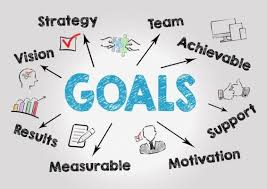
As a former accountant, strategy consultant, and someone who once worshipped at the altar of productivity, goal-setting came naturally. It was clean. Measurable. Motivational. Or so I thought.
But over time, I started to notice something underneath the surface. Something far more insidious:
Goal-setting—particularly the SMART variety—is rooted in a subtle but persistent form of disassociation.
It says:
“You’re here… but you should be over there.” “You don’t have it yet… but if you try hard enough, you might.” “You’re not enough now… but maybe one day.”
It sounds helpful. It’s actually harmful.
The Disassociation Trap
SMART goals (Specific, Measurable, Achievable, Relevant, Time-bound) sound great in theory. They’re everywhere—from coaching manuals to HR departments to motivational workshops.
But here’s what they all have in common: They’re built on the assumption of lack.
“What’s your goal?” = “What’s wrong?” = “What do you need to fix, improve, or attain before you’re allowed to feel successful?”
It’s a psychological loop that keeps you chasing. You become the person striving to become. And that very act disconnects you from who you already are.
Emotional Consumerism, Dressed Up as Self-Improvement
I’ve come to think of this as emotional consumerism.
Where traditional consumerism sells you products you don’t need… Emotional consumerism sells you identities that aren’t yours.
And the coaching industry—despite its best intentions—often plays right into this.
It tells you to set goals, achieve outcomes, close the gap. But what if the gap isn’t real?
What if the entire premise of “setting goals” is based on a worldview of scarcity?
“Every time we use an idiom, we breathe oxygen into the worldview it came from.”
Idioms feel casual—but they’re anything but neutral. These turn-of-phrase reflexes are often energetic landmines—preloaded with assumptions about speed, force, hierarchy, competition, and dominance.
They encode masculine norms into everyday language, not just business jargon.
And every time we repeat them, we aren’t just being colloquial—we’re keeping a system alive.
🧠 Why It Matters
Language isn’t just how we communicate. It’s how we think. It shapes how we:
Frame opportunity
Handle risk
Respond to conflict
Describe success
Relate to time, control, and power
And idioms? They’re shortcuts—pre-approved expressions stamped with cultural authority. But: Whose shortcuts are they? Where did they come from? And what do they keep us blind to?
⚔️ Masculine Defaults: The Origins of Idioms
Most idioms stem from one of four highly Yang-coded domains:
War: “Bite the bullet,” “call to arms,” “battle plan”
Sport: “Drop the ball,” “take a shot,” “level playing field”
Business: “Close the deal,” “bottom line,” “move the needle”
Conquest: “Plant your flag,” “make a killing,” “rule the roost”
These idioms aren’t just masculine by chance—they reflect the systems that shaped them: action-based, results-driven, output-measured, and conquest-approved.
So when we casually say things like:
“He really crushed it”
“Let’s go in guns blazing”
“Time to double down”
…we’re not just speaking. We’re submitting to a worldview.
🧰 Compare and Contrast: Idioms Reframed Through a Feminine Lens
Here’s where it gets juicy. What happens when we apply the energetic lens of The Rise of the Feminine to idioms?
Each of these shifts from a masculine “do more, win faster, own it” posture → to a feminine “feel deeper, relate wisely, honour timing” approach.
🔄 The Feminine Challenge
🌀 Try noticing your own speech patterns this week. Ask yourself:
Do I “circle back,” or do I weave something through?
Do I “fight fires,” or do I tend the heat?
Am I “pushing back,” or am I holding centre?
Do I “run something up the flagpole,” or do I invite reflection?
Masculine idioms want you to move fast, act decisively, win quickly. Feminine idioms ask you to pause, listen, hold, attune.
Neither is inherently better. But imbalance is everywhere.
🧭 TROTF Insight
Masculine language isn’t wrong. It’s just incomplete without its feminine counterpart.
The energy in our language creates the energy in our systems.
And if you’re wondering why your organisation feels burnt out, hyper-reactive, or perpetually in firefighting mode—maybe it’s because the language in use is wired to produce those outcomes.
Balance begins with what you say, and what you stop saying.
🪞 Final Thought
If you’re still using idioms that glorify war, speed, hustle, and domination—it’s not your fault. You were handed a script.
But scripts can be rewritten. And idioms can evolve.
All it takes is one leader who says:
“Let’s not pull the trigger just yet… Let’s wait for the pull instead.”
That’s leadership. That’s language. That’s the rise of the feminine.
Leadership does too — the prefix you use is the world you create.
We talk a lot about leadership styles, competencies, personality tests. But here’s a fresh take: your leadership ideology can be summarised by the prefix you unconsciously use.
This isn’t grammar. This is legacy.
📌 Introducing The Prefix Principle
Every leader leaves a linguistic fingerprint. It’s in the way they frame their decisions. The verbs they default to. The language that lingers in their wake.
And at the root of that language is a prefix — a hidden marker of mindset, strategy, and impact.
Let’s explore what that means.
🧭 The Leadership Lexicon of Prefixes
Each prefix isn’t just a grammatical tag — it’s a leadership archetype. It tells us how a leader sees the world, navigates conflict, and responds to power.
🧨 Case Study: Trump and the “De-” Archetype
If there were ever a walking embodiment of a prefix, it’s Trump. His entire leadership playbook is de-:
De-construct institutions
De-legitimise media
De-regulate systems
De-humanise opposition
De-stabilise norms
He doesn’t evolve systems — he undoes them. He doesn’t build bridges — he burns them.
Even in foreign policy, his preference for strongmen like Putin, Xi, and Kim Jong-un isn’t random. He doesn’t want to win wars. He wants to deal. And if there’s no villain to negotiate with, the stage collapses. (That’s why he opposed the strike on the Ayatollah — you can’t make a deal with a corpse.)
🧠 The Prefix as a 360° Mirror
This lens can be used reflectively, too.
“Which prefix defines your leadership?” And is that the legacy you intend to leave?
You might think you’re a co-leader. But if your language is always about re-claiming power or de-risking the future, you’re leading from another prefix entirely.
Your prefix reveals:
Your energetic stance
Your orientation to change
Your unconscious narrative
The prefix you use is the world you create.
🛠️ A Tool For Modern Leaders
This isn’t a personality test. It’s a linguistic 360°.
It reframes:
Self-awareness
Culture-shaping
Strategic communication
And the gap between intention and impact
You could use this framework in:
Executive coaching
Leadership retreats
Corporate values alignment
Thought leadership diagnostics
🔁 Some Final Reflections
Obama was a Re-builder.
Merkel was a Con-structor.
Ardern was a Co-creator.
Putin is a Pre-server of empire.
Musk? Pure Dis-ruption.
And Trump… well, we’ve covered that.
The point is: leadership leaves clues. If you want to change how you lead, start by changing your prefix.
💬 What’s Yours?
Drop me a comment with the prefix that best describes your leadership — or the one you’re trying to grow into.
Are you here to re-imagine, co-create, disrupt, or transform?
You might just discover that your leadership legacy has been hiding in plain sight — right at the beginning of every verb you choose.