
Why Primary Colors, Pastel Palettes & Media Shifts Reveal the Feminine Reframe at Play
Before we had frameworks, before we learned to read, before we were told what was “professional” — we felt things.
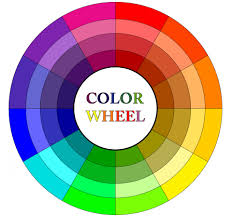
We lived in full-body sensory truth. Red. Blue. Yellow. Not just colors — emotional imprints.
These weren’t design choices. They were anchors. Our first crayons. Our first cartoons. Our first truths. They came before language, and maybe that’s why they still bypass our logic and go straight to the gut.
🎯 Primary Colors Are Emotional Code
Primary colors hit hard because they were our earliest cues for safety, danger, excitement, and play. Red meant stop. Blue meant calm. Yellow meant fun.
They weren’t metaphor — they were message. The toys, classrooms, children’s shows — all bathed in bold, foundational hues.
And even now, decades later, those colors activate the child who still lives inside. The one who remembers what it was like before KPIs and tone decks told you how to behave.
That’s why a splash of red or a burst of yellow can still jolt your nervous system. Because those colors don’t explain — they remind.
🌸 The Rise of Pastels & the Feminine Field
In contrast, pastel tones speak to something else entirely.
While primary colors are bold and foundational, pastels are ambient, receptive, interpretive. They invite, rather than declare. They don’t shout — they hold space.
Energetically, this aligns with the feminine principle:
- Softness without submission
- Invitation without insistence
- Presence without performance
You see pastels in wellness brands, spiritual content, and feminine-coded design systems. Not because they’re “pretty,” but because they’re relational. They create space for response. That’s the feminine at work.
🎥 Static Is Dead. Motion Wins.
Now zoom out.
We’re witnessing a mass migration from static design to dynamic media: From grids to reels. From blog posts to TikToks. From text to motion.
Why?
Because static is masculine: fixed, linear, polished. Video is feminine: fluid, intuitive, responsive.
Video doesn’t ask to be analyzed — it asks to be felt. It transmits tone, energy, and immediacy — in real time.
It feels like childhood: movement, unpredictability, immersion. And it doesn’t need you to “understand” it — it needs you to receive it.
This isn’t just a content shift. It’s a collective nervous system reset.
🤖 Technology: Villain or Vehicle?
It’s fashionable to blame tech for everything — distraction, burnout, dopamine addiction.
But here’s the paradox: Technology has also reawakened the feminine field.
Think about it:
- Visual-first communication
- Voice memos over emails
- Reaction GIFs over plain replies
- Emojis replacing paragraphs
- Storytelling beating bullet points
We’re not just consuming content. We’re performing aesthetic identity. And that requires a different kind of intelligence.
Not verbal. Not numeric. But visual, symbolic, sensory.
🧠 The Return of Right-Brain Intelligence
For most of the 20th century, the world was dominated by left-brain logic: Linear. Literal. Measurable. Masculine.
But now? Images beat words. Stories beat logic. Presence beats productivity.
We’re not becoming dumber. We’re becoming more attuned to right-brain wisdom: Relational. Visual. Contextual.
It’s not a regression. It’s a renaissance. And it’s deeply, energetically feminine.
🖤 Film Noir & the Aesthetics of Nostalgia
And what about the pull of black-and-white?
Why does film noir feel so emotionally rich?
It’s not because it reflects reality. It’s because it strips distraction.
Black-and-white aesthetics are high-contrast emotional filters. They let the feeling in. We aren’t drawn to them because they’re accurate — we’re drawn to them because they ask our imagination to fill in the rest.
Nostalgia, too, is a feminine mechanism: It’s not fact-based. It’s sensory, symbolic, embodied.
👾 Millennials & the Power of Aesthetic Memory
If you’re wondering whether nostalgia still works — just ask a Millennial.
This is a generation raised on screens before they had language. They learned meaning through animation, sound effects, branding, and aesthetic cues.
- Pokémon palettes
- MSN tones
- Windows 95 boot chimes
- Lisa Frank stickers
- VHS static
They are not nostalgic because they’re old. They’re nostalgic because they were aesthetically imprinted.
This isn’t sentimentality — it’s code.
Nostalgia is the UX. It doesn’t just land — it converts.
🔮 Final Thought
The feminine isn’t always soft. Sometimes she’s neon, sometimes she’s grainy VHS, sometimes she’s a looping TikTok with 7 million views and no words at all.
She doesn’t explain herself — she reminds you who you were before the world got so tidy.
This is not a design trend. This is an energetic return.
To color. To play. To memory. To the felt sense of what was true — before someone taught you to filter it out.
🟡 So maybe the next time you’re planning a strategy or a brand, don’t start with logic. Start with what you remember.
The part of you that still draws in crayon. The part of you that feels a little too much. The part of you that never really left.
Because that’s where the power lives. And that’s where the feminine returns.