
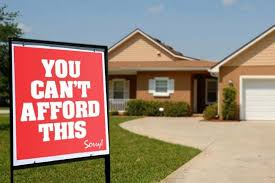
A Feminine Reframe of the Housing Crisis—and the System That Created It
A recent headline in the daily paper read: “Fast-Tracked Affordable Homes Key to Solving the Housing Crisis.”
It was meant to be hopeful. A signal of government responsiveness. A nod to the millions struggling under housing stress.
But it was also deeply revealing.
Because the solution offered—like most in the housing debate—rested on a quiet, unchallenged assumption:
That home ownership is the goal. That if we could just help more people own more houses faster, we’d be okay.
But we’re not okay. Not even close.
And maybe that’s because we’re solving the wrong problem.
We Don’t Have a Housing Crisis.
We have a belief crisis. And beneath that? A systemic imbalance.
While policymakers and pundits frame the issue as inequity—the gap between haves and have-nots—the deeper issue is imbalance: between values, energy, incentives, and assumptions.
This isn’t just about who has more. It’s about what we’ve overvalued, what we’ve undernourished, and what we’ve refused to question.
⚖️ Imbalance vs Inequity
Let’s get clear.
Inequity is about fairness: Who owns, who rents, who struggles, who soars. Imbalance is about alignment: What systems are tilted too far in one direction—regardless of how evenly their burdens are distributed.
You can correct inequity and still remain completely out of balance.
And nowhere is that more obvious than in our housing system.
🏠 The Architecture of Imbalance
Consider this:
- Banks routinely lend up to 90% of the property’s value
- First home buyers are encouraged to borrow six to seven times their income
- Up to 50% of take-home pay is now considered “acceptable” to devote to housing
- The average mortgage in Australia is now around $880,000
- Governments actively inflate prices through grants, incentives, and planning loopholes
And all of this is to help people… own?
What if that’s not the solution? What if ownership is the problem?
🧱 The System Is Designed to Protect One Side of the Balance Sheet
It’s not just that housing is unaffordable. It’s that the system was never designed to prioritise affordability in the first place.
Instead, we have three major institutional forces working in tight formation:
- The property industry, which profits from scarcity and urgency
- The finance sector, which profits from lifelong debt
- The government, which profits from asset inflation, stamp duty, and GDP optics
They protect one class of people: those who already own.
It’s not conspiracy—it’s structure. A system biased toward those holding the assets, not those seeking access to shelter.
📏 The Shrinking Dream
Once, the Australian dream was a quarter-acre block. I owned 650 square metres in leafy Wahroonga for a while. That felt good—until it didn’t. I remember aspiring to 1,000 sqm, because that’s what the “real” success stories had.
But now? We’re down to 50 sqm apartments being marketed as “starter homes.” Tiny homes. Pods. Studios. Shared kitchens. Micro-living.
Meanwhile, mortgages have grown, expectations have shrunk, and somehow the dream stays alive.
Why?
Because we’ve made home ownership the marker of:
- Adulthood
- Legitimacy
- Maturity
- Stability
- Identity
It’s no longer about how you live. It’s about what you own—or don’t.
🌱 Even the Green Alternatives Can Carry the Same Imbalance
Here’s the twist: even progressive alternatives—those pushing for sustainability, urban farming, tiny homes, permaculture—can fall into the same trap. Not because utility is bad (it isn’t), but because they often carry the same masculine energy of pressure, performance, and optimisation.
“The lawn is waste.” “Turn it into food.” “Don’t just sit there—use it.”
But here’s the distinction:
- Utility is not the problem.
- Compulsion is.
- Imbalance is.
The feminine doesn’t reject utility—it reclaims it. It says: “Use the land. But don’t be used by it.” It honours space, movement, and choice—not just productivity.
“When utility becomes performance, the imbalance remains.”
🌀 The Feminine Reframe: This Is About Energy, Not Economics
The deeper truth is energetic, not ideological.
We are living in masculine-coded systems:
- Structured
- Hierarchical
- Asset-driven
- Output-obsessed
- Performance-based
And they are breaking down.
The Rise of the Feminine is not about flipping the script. It’s about rebalancing:
- Ownership ↔ Utility
- Asset value ↔ Human value
- Permanence ↔ Mobility
- Productivity ↔ Presence
- Control ↔ Relationship
This isn’t a political correction—it’s an energetic one. A movement away from over-structuring, over-leveraging, and over-identifying with things we can own. And a return to things we can actually live with.
This is not about fairness. It’s about flow.
🧠 The Unasked Questions
Here are five questions you’ll rarely hear in policy circles—but should be at the centre of every housing debate:
- Why must everyone own their home?
- Why is renting treated like failure, not freedom?
- Why do banks lend up to 90% on an asset that may fall in value?
- Why is it acceptable to devote a third or more of your income to shelter?
- Why do we still assume house prices must always go up?
Until we confront these, we’re not solving a crisis—we’re just resuscitating a myth.
🔁 A System in Need of Rebalancing
A truly sustainable housing model doesn’t just address inequity—it restores balance. It prioritises utility over ownership. Relationship over possession. Flow over fixation.
It offers room to live—not just room to borrow against.
“The housing crisis is not simply a crisis of who has more. It’s a crisis of what we’ve chosen to value.”
We’ve overinvested in property. Underinvested in people. And lost the plot somewhere between bricks, bank loans, and belief systems.
It’s time to stop asking how we can help more people “get on the ladder.”
And start asking:
“What if there was no ladder at all?”