
💫 Every Step Is a Controlled Fall: What Walking Teaches Us About Balance, Leadership… and Emotion

Walking—this thing you’ve done since toddlerhood—is not a steady glide forward. It’s a continual collapse, caught just in time. Step, fall, catch. Step, fall, catch. Over and over.

Balance, it turns out, isn’t stillness. It’s motion. It’s recovery. It’s responsiveness.

“As we walk, every step is described as a controlled fall. And so we have to continually put in effort just to maintain our balance as we take a step.” — Stephen Lord, Neuroscientist, Neuroscience Research Australia (NeuRA)

Let that sink in.

Walking—this thing you’ve done since toddlerhood—is not a steady glide forward. It’s a continual collapse, caught just in time. Step, fall, catch. Step, fall, catch. Over and over.

Balance, it turns out, isn’t stillness. It’s motion. It’s recovery. It’s responsiveness.


🔄 Balance Is Not Static. It’s Dynamic.

We’re taught to achieve balance—like it’s a fixed destination. A place of arrival. But if walking is a controlled fall, then maybe living is too.

  • Every forward motion involves letting go.
  • Every step begins with imbalance.
  • Every act of leadership, creation, or change is a disruption—then a recalibration.

This is not chaos. It’s how balance works.

The feminine knows this. It moves. It flows. It adjusts. It doesn’t seek perfection. It seeks presence.


🎯 Stability Isn’t Standing Still.

It’s Catching Yourself, Again and Again.

In business, we try to engineer equilibrium— with dashboards, KPIs, predictable cash flow.

But true sustainability requires agility. And agility is balance in motion.

If you’re not catching yourself regularly, you’re probably not moving forward. You’re circling. Or stuck.


💡 So… What Then Can We Make of E-motion?

Let’s follow the thread.

If walking is physical motion, and motion is a controlled fall, then emotion—e-motion—is energy in motion.

Emotion is the internal equivalent of that fall-recover cycle. We feel. We wobble. We centre. We move through.

Suppress emotion = suppress movement. Suppress movement = suppress growth.

Masculine-coded leadership seeks containment, logic, control. Feminine-coded leadership welcomes expression, response, intuition.

Emotion is not the opposite of reason. It’s a signal of movement.

So when you next feel sad, angry, elated, restless— don’t rush to fix it. Recognize it as motion. Maybe even healthy motion.

Like walking, emotion isn’t failure. It’s forward.


👣 One Small Step (and One Slight Wobble) at a Time

We live in a world that praises the steady, the stable, the stoic. But what if the real mastery lies in knowing how to fall well?

To take bold steps. To feel deeply. To catch ourselves—without shame—every time.

So the next time you feel off-balance, don’t panic.

You might just be in motion.

Unlearning Twelve: The Quiet Power of a Dozen

Twelve seems harmless enough. It’s eggs. It’s inches. It’s apostles. But dig deeper, and you’ll find something stranger. Something embedded. Something you were taught to trust without question.

You might say: “It’s just a number.” Sure. But so was 100 when it became a perfect score. So was 40 when it meant hours in a workweek. So was 144 when it was the last number you memorised in Year 4 before being declared “good at maths.”

This is the story of twelve—not just as a number, but as a code. A cultural fingerprint. A hidden framework that still shapes how we think, measure, lead, and perform.


🧮 Twelve as Mastery

Ask most people of a certain generation, and they’ll tell you:

“I peaked at 12 × 12.”

There’s humour in that line, but also quiet tragedy.

Twelve by twelve was the crown jewel of school-aged numeracy. It was the final boss of the times tables. Once you reached 144, you could stop thinking and start reciting.

Which is exactly the problem.

Rote learning didn’t teach us to understand numbers. It taught us to perform memorisation and then move on. No one asked why twelve mattered. We were just told: “This is the end.”


📏 Twelve as Measurement

The imperial system—a system Australia officially abandoned in the 1970s—is obsessed with 12.

  • 12 inches in a foot
  • 12 pence in a shilling
  • 12 dozen in a gross
  • 12 hours on a clockface
  • 12 months in a calendar year

All of it built on divisibility, not logic. Twelve divides easily—by 2, 3, 4, and 6. That made it convenient for traders, builders, and merchants working without calculators.

So we didn’t just learn 12 × 12 because it was mathematically elegant. We learned it because it was practically useful—in a world that no longer exists.

We’ve since gone metric. We think in 10s and 100s and base-10 systems. And yet… the dozen survives.

We still buy eggs in twelves. Still measure time in 12-hour blocks. Still divide the year into 12 months.

Twelve is no longer functional. But it is still familiar. And in systems of control, familiarity is everything.


✝️ Twelve as Symbol

Twelve didn’t stop at trade. It crept into theology, myth, governance:

  • 12 tribes of Israel
  • 12 apostles
  • 12 Olympian gods
  • 12 signs of the zodiac
  • 12 jurors
  • 12 knights of the Round Table
  • 12 labours of Hercules

Over and over, twelve appears as a symbol of structure, completion, and legitimacy. It represents a full set, a closed loop, a circle that needs no further expansion.

In other words: order. And where there is order, there is control. Where there is control, there is programming.


🧠 What We Were Taught to Believe

We weren’t just taught that twelve was enough. We were taught that twelve was truth.

Twelve became synonymous with:

  • Mastery
  • Performance
  • Correctness
  • Completion

But what if it’s not? What if twelve is a containment strategy—not a sign of intelligence?

What if the real lesson wasn’t to master twelve… …but to stop asking what lies beyond it?


🌕 What We Lost at Thirteen

There’s a reason so many cultures fear the number 13. It’s unpredictable. It doesn’t fit neatly into the system. It disrupts the order.

There were 12 apostles. But at the Last Supper, there were 13 people. And one of them betrayed the entire narrative.

The 13th seat represents chaos. Disruption. Feminine cycles. Lunar rhythms. The wild, intuitive, cyclical parts of nature that the masculine-coded world tried to suppress.

Even though we’ve moved to decimal systems, we’re still living by the energy of twelve:

  • Be complete
  • Be correct
  • Be measurable
  • Be divisible
  • Be done

Thirteen? That’s for rebels.


🔁 What We Must Now Unlearn

Unlearning twelve isn’t about ditching eggs or tearing up calendars. It’s about recognising that much of what we learned as “fact” was actually design. And much of what we obey as “truth” is actually tradition.

We were taught that intelligence was:

  • Memorisation
  • Precision
  • Containment
  • Predictability

But real intelligence is:

  • Context
  • Curiosity
  • Pattern recognition
  • The courage to break away from inherited metrics

You didn’t fail when you forgot 9 × 7. You failed when you believed that forgetting it made you “bad at maths.”


🧭 The Unlearning Begins

You don’t have to throw away everything the number twelve gave you.

But you should know this:

You weren’t supposed to stop thinking at 144. You were supposed to start asking better questions.

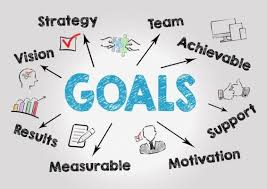
Why I No Longer Set SMART Goals

(And what I do instead.)

“When you are asked, ‘What’s your SMART goal?’ you’re really being asked, ‘What’s missing?’”

It took me years to see that.

As a former accountant, strategy consultant, and someone who once worshipped at the altar of productivity, goal-setting came naturally. It was clean. Measurable. Motivational. Or so I thought.

But over time, I started to notice something underneath the surface. Something far more insidious:

Goal-setting—particularly the SMART variety—is rooted in a subtle but persistent form of disassociation.

It says:

“You’re here… but you should be over there.” “You don’t have it yet… but if you try hard enough, you might.” “You’re not enough now… but maybe one day.”

It sounds helpful. It’s actually harmful.


The Disassociation Trap

SMART goals (Specific, Measurable, Achievable, Relevant, Time-bound) sound great in theory. They’re everywhere—from coaching manuals to HR departments to motivational workshops.

But here’s what they all have in common: They’re built on the assumption of lack.

“What’s your goal?” = “What’s wrong?” = “What do you need to fix, improve, or attain before you’re allowed to feel successful?”

It’s a psychological loop that keeps you chasing. You become the person striving to become. And that very act disconnects you from who you already are.


Emotional Consumerism, Dressed Up as Self-Improvement

I’ve come to think of this as emotional consumerism.

Where traditional consumerism sells you products you don’t need… Emotional consumerism sells you identities that aren’t yours.

And the coaching industry—despite its best intentions—often plays right into this.

It tells you to set goals, achieve outcomes, close the gap. But what if the gap isn’t real?

What if the entire premise of “setting goals” is based on a worldview of scarcity?


Abundance Doesn’t Live in a KPI

In my article Creating from the Heart, I wrote:

“The feminine doesn’t need a framework. She doesn’t work on timelines. She doesn’t care about your OKRs.”

Creation—true creation—doesn’t come from performance metrics. It doesn’t emerge from a deficit. It arises from wholeness.

“Creating from the heart is not a strategy—it’s a state.”

And abundance, as I’ve come to learn, is not something you earn. It’s not a milestone or an outcome. It’s a frequency. A field. A felt experience.

You don’t “achieve” abundance. You remember you are it.


The Shift: From SMART Goals to Soulful Knowing

I’m not against direction. I’m not against intention.

But I am against systems that teach you to believe you are perpetually incomplete.

What I teach now—and what I live—is not about getting from here to there.

It’s about:

  • Reconnecting to your own energetic centre
  • Reclaiming the parts of you exiled by ambition
  • Creating from sufficiency, not striving

And that doesn’t require a SMART goal. It requires a willingness to see yourself—not as someone who must become—but as someone who already is.


Final Thought

The future isn’t powered by those who can optimise productivity. It’s powered by those who can embody presence.

Not from the mind. From the heart.

Because the more you chase your goals, the further you may drift from yourself.

Ready to return? Start here: Take the Test

🗣 Rewriting the Rules: Idioms and the Inherited Bias of Everyday Speech

(Education Series: Part X – Idioms)

“Every time we use an idiom, we breathe oxygen into the worldview it came from.”

Idioms feel casual—but they’re anything but neutral. These turn-of-phrase reflexes are often energetic landmines—preloaded with assumptions about speed, force, hierarchy, competition, and dominance.

They encode masculine norms into everyday language, not just business jargon.

And every time we repeat them, we aren’t just being colloquial—we’re keeping a system alive.


🧠 Why It Matters

Language isn’t just how we communicate. It’s how we think. It shapes how we:

  • Frame opportunity
  • Handle risk
  • Respond to conflict
  • Describe success
  • Relate to time, control, and power

And idioms? They’re shortcuts—pre-approved expressions stamped with cultural authority. But: Whose shortcuts are they? Where did they come from? And what do they keep us blind to?


⚔️ Masculine Defaults: The Origins of Idioms

Most idioms stem from one of four highly Yang-coded domains:

  • War: “Bite the bullet,” “call to arms,” “battle plan”
  • Sport: “Drop the ball,” “take a shot,” “level playing field”
  • Business: “Close the deal,” “bottom line,” “move the needle”
  • Conquest: “Plant your flag,” “make a killing,” “rule the roost”

These idioms aren’t just masculine by chance—they reflect the systems that shaped them: action-based, results-driven, output-measured, and conquest-approved.

So when we casually say things like:

  • “He really crushed it”
  • “Let’s go in guns blazing”
  • “Time to double down”

…we’re not just speaking. We’re submitting to a worldview.


🧰 Compare and Contrast: Idioms Reframed Through a Feminine Lens

Here’s where it gets juicy. What happens when we apply the energetic lens of The Rise of the Feminine to idioms?

Article content

Each of these shifts from a masculine “do more, win faster, own it” posture → to a feminine “feel deeper, relate wisely, honour timing” approach.


🔄 The Feminine Challenge

🌀 Try noticing your own speech patterns this week. Ask yourself:

  • Do I “circle back,” or do I weave something through?
  • Do I “fight fires,” or do I tend the heat?
  • Am I “pushing back,” or am I holding centre?
  • Do I “run something up the flagpole,” or do I invite reflection?

Masculine idioms want you to move fast, act decisively, win quickly. Feminine idioms ask you to pause, listen, hold, attune.

Neither is inherently better. But imbalance is everywhere.


🧭 TROTF Insight

Masculine language isn’t wrong. It’s just incomplete without its feminine counterpart.

The energy in our language creates the energy in our systems.

And if you’re wondering why your organisation feels burnt out, hyper-reactive, or perpetually in firefighting mode—maybe it’s because the language in use is wired to produce those outcomes.

Balance begins with what you say, and what you stop saying.


🪞 Final Thought

If you’re still using idioms that glorify war, speed, hustle, and domination—it’s not your fault. You were handed a script.

But scripts can be rewritten. And idioms can evolve.

All it takes is one leader who says:

“Let’s not pull the trigger just yet… Let’s wait for the pull instead.”

That’s leadership. That’s language. That’s the rise of the feminine.

The Prefix Principle: What Language Reveals About Leadership

They say success leaves clues.

Leadership does too — the prefix you use is the world you create.

We talk a lot about leadership styles, competencies, personality tests. But here’s a fresh take: your leadership ideology can be summarised by the prefix you unconsciously use.

This isn’t grammar. This is legacy.


📌 Introducing The Prefix Principle

Every leader leaves a linguistic fingerprint. It’s in the way they frame their decisions. The verbs they default to. The language that lingers in their wake.

And at the root of that language is a prefix — a hidden marker of mindset, strategy, and impact.

Let’s explore what that means.


🧭 The Leadership Lexicon of Prefixes

Article content

Each prefix isn’t just a grammatical tag — it’s a leadership archetype. It tells us how a leader sees the world, navigates conflict, and responds to power.


🧨 Case Study: Trump and the “De-” Archetype

If there were ever a walking embodiment of a prefix, it’s Trump. His entire leadership playbook is de-:

  • De-construct institutions
  • De-legitimise media
  • De-regulate systems
  • De-humanise opposition
  • De-stabilise norms

He doesn’t evolve systems — he undoes them. He doesn’t build bridges — he burns them.

Even in foreign policy, his preference for strongmen like Putin, Xi, and Kim Jong-un isn’t random. He doesn’t want to win wars. He wants to deal. And if there’s no villain to negotiate with, the stage collapses. (That’s why he opposed the strike on the Ayatollah — you can’t make a deal with a corpse.)


🧠 The Prefix as a 360° Mirror

This lens can be used reflectively, too.

“Which prefix defines your leadership?” And is that the legacy you intend to leave?

You might think you’re a co-leader. But if your language is always about re-claiming power or de-risking the future, you’re leading from another prefix entirely.

Your prefix reveals:

  • Your energetic stance
  • Your orientation to change
  • Your unconscious narrative

The prefix you use is the world you create.


🛠️ A Tool For Modern Leaders

This isn’t a personality test. It’s a linguistic 360°.

It reframes:

  • Self-awareness
  • Culture-shaping
  • Strategic communication
  • And the gap between intention and impact

You could use this framework in:

  • Executive coaching
  • Leadership retreats
  • Corporate values alignment
  • Thought leadership diagnostics

🔁 Some Final Reflections

  • Obama was a Re-builder.
  • Merkel was a Con-structor.
  • Ardern was a Co-creator.
  • Putin is a Pre-server of empire.
  • Musk? Pure Dis-ruption.
  • And Trump… well, we’ve covered that.

The point is: leadership leaves clues. If you want to change how you lead, start by changing your prefix.


💬 What’s Yours?

Drop me a comment with the prefix that best describes your leadership — or the one you’re trying to grow into.

Are you here to re-imagine, co-create, disrupt, or transform?

You might just discover that your leadership legacy has been hiding in plain sight — right at the beginning of every verb you choose.

🦋 The Butterfly Reframe: Rethinking Scarcity in an Age of Too Much and Never Enough

Let’s talk scarcity. It’s the governing law of economics. The founding myth of capitalism. The invisible ruler of how we price value, time, land—and even love.

Scarcity says:

There isn’t enough. You’d better hurry. You’d better compete.

And at first glance, it holds up.

In economics, scarcity underpins the very system we operate within:

  • Land is scarce, so real estate becomes generational wealth.
  • Resources are finite, so nations dig faster, build bigger, burn hotter.
  • Time is limited, so we race through it, multitask it, monetise it.

But what if the deeper truth is this:

Scarcity isn’t just real—it’s engineered. It’s not just a fact—it’s a worldview.


🏗️ Real Estate: The Masculine Scarcity Story

The real estate industry is built on this exact principle. Land is finite. Beachfront doesn’t regenerate. Inner-city zoning doesn’t expand. The value of a plot is driven by its limitation.

But that model—buy, hold, outbid—doesn’t just drive price. It shapes how we see the world:

  • Win–lose
  • Fence it off
  • Hold it tight
  • Wait for it to rise

In this story, land is masculine-coded scarcity. It’s hoarded. Fenced. Owned.

But there’s another kind of scarcity that doesn’t show up on balance sheets…


👶 The Grandparent Paradox

Spend time with a grandparent and you’ll experience a completely different economy. Not one built on yield or leverage—but one built on presence.

And here’s the beautiful oxymoron:

The elderly are running out of time— yet they have all the time in the world for their grandchildren.

Their time is limited. But it’s not rushed. Their attention is sparse. But it’s undivided.

That’s not a contradiction. That’s wisdom.

And it’s a truth children know instinctively:

Presence—not productivity—is the most valuable gift you can give.


🧠 Attention, Energy, Trust: The Hidden Scarcities

Economists talk about land, labour and capital. But in the real world, we are running out of far more essential things:

  • Attention – fractured by devices, monetised by algorithms
  • Energy – drained by performance cultures, burnout, overcommitment
  • Trust – in leaders, in systems, in each other
  • Cognitive bandwidth – decision fatigue is the new pandemic
  • Imagination – algorithmic thinking kills curiosity
  • Presence – we show up everywhere, except here, now

We are told to budget our money. But few of us know how to budget our presence.


🦋 The Feminine Reframe

All of this brings me to one of the most beautiful quotes I’ve ever read:

“The butterfly counts not months but moments, and has time enough.” — Rabindranath Tagore

Maybe that’s the reframe we need:

  • Masculine scarcity says: I need more.
  • Feminine wisdom says: We are abundant.

The butterfly isn’t worried about legacy or leverage. It doesn’t hoard nectar. It simply lands. And gives the flower its full attention.


💬 Final Thought

Land was the currency of the industrial age. Attention is the currency of the digital age. But presence? That’s the currency of the feminine.

And if presence is the new wealth, then the grandparent is the new billionaire.


✋ Take the Test

If you’re running out of energy, patience, or presence… Maybe you’ve bought into someone else’s scarcity story.

🌀 Find your balance. 🔍 Rethink your stress. 💡 Reclaim your energy.

Your Burnout Isn’t Caused by Workload

It’s Caused by Disconnection.

For decades, we’ve been sold the story that burnout is a byproduct of working too hard. Too many emails. Too many hours. Too many deadlines.

The solution? Cut back. Book a holiday. Attend another resilience workshop.

It sounds logical on the surface — until you realize it doesn’t actually fix the underlying problem.

Because the real cause of burnout isn’t the workload itself. It’s the disconnection that underpins it.


The Hidden Cause of Burnout

Burnout is not just exhaustion. It’s emotional isolation, disguised as productivity fatigue.

People don’t burn out because they work hard. They burn out because they become disconnected from:

  • The meaning behind their work,
  • The leadership energy that once inspired them,
  • The financial clarity that underpinned sound decisions,
  • The strategic alignment that gave direction to their efforts.

Workload doesn’t cause burnout. Workload exposes where the system is already broken.

When a leader or a professional feels unseen, unheard, or misaligned with their organization’s purpose, even the normal pressures of work can feel unbearable.

When the relational, energetic, and financial frameworks erode, burnout is no longer a matter of if. It becomes a matter of when.


Why Disconnection Matters More Than Overwork

Disconnection is lethal because it operates silently.

You can survive a tough quarter. You can survive a heavy project load.

But what you can’t survive — indefinitely — is feeling like:

  • Your efforts don’t matter,
  • No one sees your contribution,
  • Leadership is disconnected from reality,
  • The financial structure you’re working toward is unclear, unstable, or irrelevant.

When connection breaks, energy leaks. And without energy, all the resilience tips and mindfulness apps in the world won’t save you.


Burnout is a Systemic Failure, Not a Personal Weakness

One of the great disservices of the corporate wellness industry has been framing burnout as a personal failing.

The narrative goes:

“You didn’t meditate enough. You didn’t self-care enough. You didn’t set better boundaries.”

It’s blame disguised as advice.

Here’s the truth: Burnout is a leadership failure. Burnout is a governance failure. Burnout is a strategic failure.

When leadership energy is misaligned, when financial stress permeates decision-making, when strategy becomes reactive instead of intentional — burnout becomes inevitable.

The individuals aren’t broken. The system is.

And until the system is recalibrated, no amount of yoga, mindfulness, or gratitude journaling will fix it.


The New Path: Leadership Recalibration

If we want to genuinely address burnout, we have to stop treating it as an emotional emergency and start treating it as a leadership recalibration opportunity.

The solution isn’t to slow down. It’s to realign:

  • Leadership Energy: Leaders must reconnect with purpose — theirs and their team’s.
  • Strategic Alignment: Organizations must stop reacting to symptoms and start engineering environments where high performance and well-being are coexistent.
  • Financial Literacy: Leaders must understand the financial models underpinning their decisions, so ambiguity and misalignment don’t bleed stress through the system.

When leaders recalibrate, they don’t just survive challenging periods — they create conditions where people can thrive under pressure without breaking.


The Leadership Question That Matters

If you’re a leader reading this, here’s the question that matters:

Are your people exhausted because they work too hard? Or are they exhausted because they feel disconnected from what they’re working toward?

If it’s disconnection — and it almost always is — the fix isn’t less work. The fix is better leadership structure.

Reconnection to purpose. Reconnection to strategy. Reconnection to financial clarity.

This is not about coddling. This is not about downtime. This is about restoring the very architecture that allows human performance to scale without collapse.


Final Thought

Burnout isn’t a badge of honor. It’s not a rite of passage. And it’s certainly not an individual failure.

It’s a signal that leadership has gone off course.

Fix the system. Realign the leadership. Reconnect the energy.

Because in high-performing organizations, connection isn’t a luxury. It’s the operating system that everything else depends on.

And when connection is strong, burnout isn’t the conversation anymore.

Performance is.

When It Feels Right… But You Can’t Explain Why

We live in a world that mistrusts what it can’t explain.

So when something feels aligned, but we can’t point to a spreadsheet, a stat, or a signed-off strategy—we do what we’ve been conditioned to do:

We call it “instinct.” We dress it up as “good judgement.” We mutter, “it just felt right,” and move on before anyone asks us to elaborate.

But let’s pause for a moment.—we do what we’ve been conditioned to do:

We call it “instinct.” We dress it up as “good judgement.” We mutter, “it just felt right,” and move on before anyone asks us to elaborate.

But let’s pause for a moment.

What if what you felt wasn’t instinct at all? What if it wasn’t judgement either? What if you were experiencing something far more powerful—yet far less understood?

What if what you were really feeling was… resonance?


🧠 Four Forces We Confuse

Let’s name what’s actually going on when we get that unmistakable sense of yes (or no), without any logical reason to back it up.

Here’s the lineup:

Article content

Each of these has its place. But when people say “I went with my gut,” or “it felt right,” they’re usually pointing to intuition or resonance—but labelling it as instinct or logic.

Let’s walk through a few examples.


1. 🧍♂️ “I trusted my gut” → Probably Not Instinct

When most people say this, they’re not describing true instinct.

Instinct is a survival mechanism. It lives in the lower body. It fires when we’re in danger. Think: adrenaline spike, tunnel vision, rapid heartbeat.

But most of the time, that “gut feeling” we get is calm, quiet, and certain.

That’s not fear-based. That’s field-based. That’s not your sacral centre flaring up. That’s your third eye tuning in.

In short:

Instinct protects. Intuition directs.


2. 🧐 “It just felt right” → Actually a Judgement

Here’s the thing: “Right” isn’t a feeling. It’s a verdict.

The original sensation was probably one of:

  • Peace
  • Stillness
  • Expansion
  • Soft excitement
  • Soul-level yes

But the rational mind can’t sit in mystery, so it slaps a label on it: “right.” That’s not intuition. That’s judgement posturing as intuition.

You’re not feeling “rightness.” You’re feeling resonance—but your brain needed to wrap it in something familiar.


3. 💳 “You buy emotionally, justify rationally” → Intuition With a Receipt

This one’s straight from the consumer behaviour playbook. We act from a deep yes (usually felt before we can explain it), and then rush to rationalise it:

  • “It was on sale.”
  • “It’ll go with everything.”
  • “It’s an investment piece.”

No, it’s not. It’s resonance in motion.

The decision came from your intuitive body. The logic came later—like a publicist trying to make it look official.


4. 🏢 “They were a cultural fit” → Sanitised Intuition

This one’s a corporate classic.

“He just fit the culture.” “She had the right vibe.” “They felt like one of us.”

No one can quite explain it—but everyone nods.

That’s not about cultural alignment. That’s about energetic harmony. It’s intuition, field perception, resonance—dressed in HR-approved language.

You didn’t run a values match analysis. You felt them regulate the room. That’s what sealed it.


5. 💞 “He just gets me” → Attunement, Not Understanding

We say “gets me” like it’s about comprehension. But it’s not.

It’s not that he memorised your preferences. It’s not that he read your CV or your diary.

It’s that he met you on the frequency you live on.

Understanding is a cognitive act. But attunement is energetic. That moment when you feel fully seen, without explanation?

That’s resonance. That’s the feminine intelligence in action.


🔮 So What’s Really Going On?

Each of these phrases—gut feeling, felt right, cultural fit, gets me—is reaching for the same thing:

Unexplained resonance.

It doesn’t shout. It hums.

It’s not instinct. It’s not logic. It’s the inner tuning fork that says this is the way—even when the map says otherwise.


🧘♂️ TROTF Final Word

The masculine wants evidence. The feminine responds to frequency.

Instinct says: run. Judgement says: approve. Intuition says: go. Resonance says: here.

The next wave of leadership—hell, the next wave of being human—requires us to stop asking “Is it right?” and start asking “Is it resonant?”

Because in a world obsessed with proof, trusting what you can’t explain is the ultimate revolution.